

DBV Technologies is making a new bid to win FDA approval for its Viaskin Peanut Patch. The company has submitted a biologics license application to the Food and Drug Administration for the patch in peanut-allergic children ages 4 to 7.
The patch is a form of epicutaneous immunotherapy, or EPIT, which delivers tiny amounts of peanut protein through the skin. The goal is desensitization, or increasing the threshold for how much peanut a child can consume before experiencing allergy symptoms.
Each patch contains 250 micrograms of peanut protein, or roughly 1/1,000th of a peanut. It’s applied to the back, with the site of application rotated daily. Over time, exposure to small amounts of peanut protein is intended to increase tolerance.
The submission “reflects years of rigorous clinical development, meaningful contributions from the entire food allergy community, and ongoing collaboration with the FDA,” Daniel Tassé, DBV Technologies’ CEO, said on September 29.
DBV has requested priority review for its application.
“This BLA submission marks an important milestone for DBV Technologies and the children and families living with peanut allergy,” a DBV representative said. “We are focused on working closely with the FDA throughout the review process and remain committed to advancing this potential new treatment option for this community.”
Viaskin Patch’s Phase 3 Trial
The Viaskin patch application is supported by the Phase 3 VITESSE trial. It involved more than 650 children ages 4 to 7 at 86 sites in the U.S., Canada, the United Kingdom, Europe and Australia. Children were randomly assigned to receive either the peanut patch or a placebo patch. Two-thirds were on the active patch, while the rest were on the placebo.
After one year, 47 percent of the children wearing the active peanut patch were considered treatment responders. That meant children who reacted to 30 milligrams (mg) or less of peanut protein at the start were able to tolerate at least 300 mg of peanut during a food challenge.
For children who could tolerate 100 mg of peanut protein at the start, a response meant reaching at least 600 mg of peanut after one year. One peanut is about 250 to 300 mg of peanut protein. Fewer than 15 percent in the placebo group met the response criteria.
Nearly 83 percent of children increased their eliciting dose, or the amount of peanut protein that triggered a reaction during a food challenge, after one year. That compared with about 48 percent in the placebo group.
DBV says VITESSE is the largest immunotherapy clinical trial to date for children in this age group. The most common treatment-related adverse events were skin symptoms at the patch site.
After the one-year study, children had the option to continue into an open-label extension in which all participants received the peanut patch for up to three years of treatment. DBV has not yet released the year-two or year-three results from VITESSE.
DBV Perseveres, Redesigns Patch
DBV’s development road has been long and bumpy. The FDA granted the Viaskin Peanut Patch therapy fast-track status to receive priority review back in 2012.
But in 2017, its Phase 3 study called PEPITES, which enrolled children ages 4 to 11, failed to meet a statistical threshold set by the FDA. Still, the patch showed signs of benefit. About 35 percent of children receiving the peanut patch met the study’s definition of a responder after one year. This compared with about 14 percent receiving the placebo.
The company continued to study, turning its attention to how children responded to the skin patch with longer treatment. After three years of treatment, 52 percent of children could tolerate 1,000 mg of peanut protein before starting to react. That’s roughly three to four peanuts.
In 2018, the company submitted its first biologics license application for the patch in children ages 4 to 11. It voluntarily withdrew the application two months later after the FDA said it needed more data on manufacturing procedures and quality controls. DBV resubmitted the application in August 2019.
A more consequential FDA setback came in August 2020. The FDA declined to approve the patch, citing concerns including whether the patch adhered to the skin consistently enough and whether problems with adhesion could have affected the results.
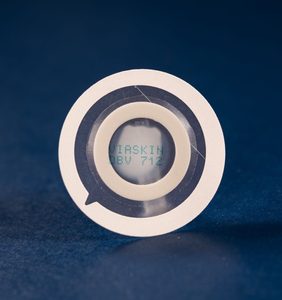
DBV persevered. It redesigned the patch to improve adhesion, creating a larger, circular patch for children ages 4 and older.
A post-PEPITES analysis also found that the patch was more effective in desensitizing younger children than older ones. The Phase 3 trial, VITESSE, which tested the new patch design, lowered the top age to 7.
Toddler Trial
Meanwhile, DBV is also conducting a separate trial of the patch in children ages 1 to 3 years. The results so far in this even younger age group have been encouraging.
A Phase 3 trial in toddlers published in the New England Journal of Medicine found that after one year, 67 percent toddlers could eat up to 1,000 mg of peanut before starting to react. That’s about three to four peanuts.
Protection improved with longer use. In an open-label extension in which all participants received the active patch, 81 percent could tolerate 3 to 4 peanuts after two years. About 56 percent could tolerate the full food challenge, equivalent to roughly 12 to 14 peanuts. After three years, 68 percent could eat that much.
In June 2026, DBV launched a trial in even younger children – peanut-allergic babies ages 6 to 12 months. The hope is that by introducing peanut early in life, while the immune system is still maturing, could lead to long-lasting desensitization.
Related Reading:
Trial of Peanut Patch in Babies Launches, With Hope for Tolerance
Fecal Transplant Pills for Peanut Allergy Advance to Phase 2 Trial