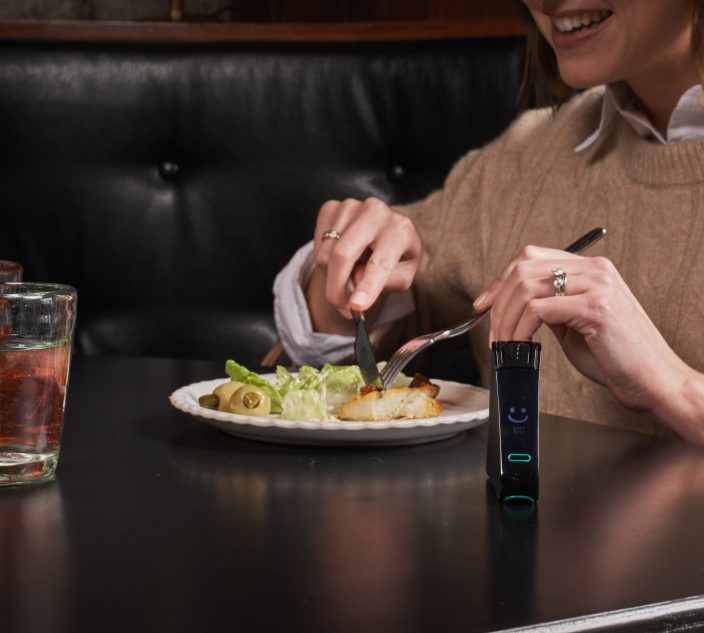
Competition between epinephrine auto-injector alternatives is heating up. The neffy nasal epinephrine spray is already FDA-approved. A dissolving oral epinephrine film is nearing a decision from regulators.
The FDA will decide whether to approve Aquestive Therapeutic’s dissolving film, Anaphylm, on or before January 31, 2026. Aquestive recently announced that the FDA will not require an advisory committee review of Anaphylm.
But now, ARS Pharmaceuticals, which makes the neffy spray, is seeking to delay Anaphylm’s approval. In late September 2025, it filed what’s called a “citizen petition” with the U.S. Food and Drug Administration. In it, ARS Pharma attorneys contend that the FDA should first require further studies.
Anaphylm is a thin, postage stamp-sized film that adheres under the tongue, dissolves in seconds and delivers epinephrine through the oral membrane. If the film receives FDA approval, “we are well-positioned for launch,” Dan Barber, Aquestive’s president and CEO, has said.
ARS Pharma, meanwhile, is urging the FDA to hold off on that approval. The petition cites concerns with Anaphylm’s higher dosing, the impact of mouth swelling on absorption, and a lack of real-world data. ARS Pharma has also asked for a boxed warning about “potential cardiovascular risk” in some people.
The petition specifically questions whether patients can hold the film for long enough to absorb its epinephrine during anaphylaxis. It notes that severe reactions often involve swelling and other mouth symptoms. “The current evidence does not adequately demonstrate safety or efficacy for this product,” ARS Pharma alleges.
Aquestive strongly disputes those claims. In a statement to Allergic Living, Barber pointed to its clinical trial program that included 11 studies with 967 administrations. Trials for the company’s 12 milligram (mg) oral film included 840 single dose and 127 repeat-dose administrations in adults and children weighing at least 66 pounds. Barber said: “Our application is supported by one of the largest-known epinephrine study programs conducted to date.”
“We designed our data package to provide evidence of Anaphylm’s safety and efficacy for patients experiencing severe allergic reactions,” Barber’s statement said.
Finally, Needle-Free Epinephrine
For decades, epinephrine auto-injectors were the only option patients with food, sting and drug allergies had to treat anaphylaxis.
Auto-injectors are effective in halting severe allergic reactions. But many people with severe allergies fail to carry auto-injectors, or hesitate to use them when needed.
Patients and families gained a new option in August 2024, when the FDA approved neffy as the first needle-free alternative. The 2 mg nasal sprayer was authorized for children and adults weighing at least 66 pounds. In March 2025, the FDA approved a lower-dose, 1 mg version for children weighing 33 to 66 pounds.
Since then, the company has collected survey responses from about 300 allergists who used neffy in clinics to treat reactions to oral food challenges or allergen immunotherapy shots. Doctors reported the nasal sprayer is as effective as epinephrine injections.
Next Up: Epinephrine Oral Film
Meantime, Aquestive Therapeutics was close behind with the development of Anaphylm. If approved, it will be the first oral epinephrine product.
The FDA accepted Aquestive’s new drug application in June 2025. A new drug application includes all of the safety and efficacy data that a company thinks it needs to win approval.
In an important clinical trial involving 64 adults, the median time for Anaphylm to reach peak concentration of epinephrine in the bloodstream was 12 minutes. That compared to 20 minutes for EpiPen, 30 minutes for the AUVI-Q auto-injector, and 50 minutes for epinephrine given by syringe.
At the FDA’s request, the company also studied the Anaphylm in people experiencing mouth swelling due to oral allergy syndrome. That’s a condition that causes localized swelling and itching in the mouth, tongue and throat after eating certain raw fruits or vegetables such as apples or kiwi.
Swelling started to ease in as soon as two minutes after receiving Anaphylm, that study found. Average time to complete symptom resolution was 12 minutes.
However, ARS Pharma asks the FDA to seek further study, noting that OAS is usually less severe than an IgE-mediated allergic reaction.
As with all epinephrine products, Anaphylm trials weren’t conducted in patients experiencing anaphylaxis. This is for safety reasons. Instead, trials are conducted in healthy volunteers. Researchers measure concentration of epinephrine in the blood, as well as heart rate and blood pressure changes.
If approved, Anaphylm will be packaged in a foil packet small enough to be slipped into a wallet, pocket or mobile phone case. Stability studies have shown Anaphylm maintains potency even after exposure to high temperatures.
FDA: No Committee for Anaphylm
In September 2025, Aquestive announced the FDA would not require an advisory committee meeting process. This is unlike neffy, which had to go through an advisory committee review in May 2023, before its nasal epinephrine was approved.
An FDA advisory committee is an independent panel of experts, including doctors and scientists. At a committee’s public hearing, patient advocates often provide comments. Advisory committees review data on proposed drugs and provide non-binding recommendations to the FDA.
“We are encouraged that the FDA has determined that an advisory committee meeting is not required for approval of Anaphylm,” Barber said.
However, ARS Pharma questions that decision. It raises issues such as whether vomiting, a frequent anaphylaxis symptom, would impact the ability to use Anaphylm. As well, the neffy maker suggests to the FDA that not enough is known about the safety of using the oral film in those who have gum disease or angioedema (mouth swelling).
ARS Pharma says that without the independent expert evaluation, a “citizen petition became the only avenue to raise critical safety and efficacy concerns with the agency in a public forum.”
What is a Citizen Petition?
Citizen petitions were originally created as a way for the public to voice concerns about FDA regulations or drugs. But an analysis of 12 years of FDA data found drug companies frequently use them strategically to delay competitors’ products. This has especially been the case with brand drug companies looking to delay FDA approval of a generic alternative.
The FDA must respond to citizen petition within 180 days. The agency can accept, deny or dismiss the petition.
In 2015, Mylan Specialty, the company that long marketed the EpiPen, filed a petition alleging that the design of a generic auto-injector proposed by Teva led to user error. Mylan filed the citizen petition six months before Teva’s generic auto-injector was scheduled to enter the market. Mylan’s petition was denied by the FDA.
Neffy too was the target of a citizen petition filed by Viatris (which now owns Mylan). The June 2023 petition urged the FDA to delay approval of neffy, claiming a need for further study.
Aquestive has also used the tactic, mostly recently when it sought to delay approval of a rival company’s diazepam nasal spray for epileptic seizures. Aquestive’s petition was denied.
As for Anaphylm, Aquestive says that the company has worked closely with the FDA on its application, “which we believe meets the agency’s rigorous review standards.”
“We believe there is a need for continued innovation and choice in this patient community, and Anaphylm is designed to provide an additional safe and effective option for patients.”
Related Reading:
Anaphylaxis But No Epi: Inside an Epidemic of Hesitation