
Symptoms of anaphylaxis resolved in about nine out of 10 patients after one dose of neffy epinephrine spray, a new survey finds. About one in 10 needed a second dose.
The findings are from a survey of 300 allergists who treated 545 patients with the novel needle-free nasal epinephrine device in their allergy clinics. The patients were experiencing severe reactions during oral food challenges or while getting allergen immunotherapy shots.
This is the first large-scale published report showing how well the nasal sprayer works during real-world anaphylaxis. Results showed 89.2 percent of patients treated with the 2 milligram (mg) neffy spray had symptoms resolve after one dose. Symptoms resolved in the other 10.8 percent after a second dose.
Those numbers closely parallel a previous data analysis of 86 studies on injected epinephrine. That research found 88.9 percent of food-induced allergic reactions treated by healthcare professionals resolved after one dose of epinephrine from a syringe or an auto-injector. About 11.1 percent needed two doses.
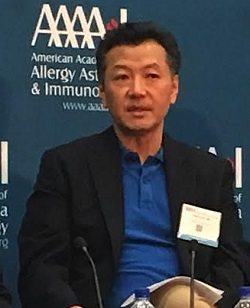
Dr. Thomas Casale says the nasal spray findings provide a “degree of comfort” to patients and doctors considering using neffy to treat allergy emergencies.
“These data are very reassuring in that about 90 percent of patients who had an acute allergic reaction were effectively treated with neffy and had responses typical of what you’d expect from an injectable product,” says Casale. He’s chief of clinical and translational research in Division of Allergy and Immunology at the University of South Florida.
Testing Needle-Free Epinephrine
The Food and Drug Administration approved neffy in August 2024 as the first needle-free treatment for allergic reactions to food, insect stings or drugs. The 2 mg dose is for adults and children weighing 66 pounds or more. A 1 mg neffy dose for children 4 years and older became available in May 2025.

To introduce the epinephrine device, ARS Pharmaceuticals, neffy’s manufacturer, distributed doses of the sprayers to physicians nationwide for use in patients experiencing allergic reactions in their clinics. Label instructions recommend a second dose if symptoms do not improve or worsen five minutes after the first dose.
The doctors were asked to provide feedback. As of March 2025, 301 physicians had reported treating 545 patients with the neffy 2 mg sprayer.
While many doctors and patients welcomed a needle-free epinephrine option, some wanted more evidence it worked as well as existing epinephrine products, says Richard Lowenthal, ARS Pharma’s president and CEO.*
Clinical trials for epinephrine products, including neffy, are done in healthy volunteers, not in people experiencing anaphylaxis. This is for safety reasons. Casale notes that it would be risky to give people experiencing anaphylaxis a placebo, if they’re part of a study control group. Instead in trials, researchers measure blood epinephrine levels and changes in heart rate and blood pressure as markers of absorption.
Neffy was also tested in individuals with nasal congestion due to colds or allergic rhinitis.
“Some doctors have asked, ‘Are you sure it works the same in the real-world?’ It’s important to them to see it being used in other clinics,” Lowenthal says. The results show neffy’s effectiveness is “basically the same as injections.”
Gaining Real-World Data on Neffy
Until now, the only real-world data on the effectiveness of the neffy was a small study of 15 children ages 6 to 17 in Japan. It showed that the epinephrine spray quickly reversed moderate anaphylaxis in children undergoing food challenges.
A study led by Casale previously found that neffy relieved itch and hives in people with chronic urticaria. “However, it’s not a recommended treatment for urticaria because the hives come back after the epinephrine wears off,” he says.
Although not included in this survey, ARS Pharma is also gathering data from doctors on the 1 mg dose for smaller children experiencing anaphylaxis in allergy clinics. The results are expected later this year.
The current neffy real-world survey results will be published as correspondence in the Annals of Allergy, Asthma and Immunology. Casale is an author of the research and member of ARS Pharma’s Scientific Advisory Board.
Prospective Study Underway

A larger, prospective study of nasal epinephrine in the real-world has also begun enrolling patients, Lowenthal says. The study aims to include about 600 participants undergoing food challenges at 15 medical sites. If anaphylaxis occurs, patients will receive either neffy or epinephrine from a syringe.
The FDA had requested this post-approval study to collect additional safety data, Lowenthal says. Physicians will not know whether a patient is assigned to receive the nasal sprayer or injected epinephrine until the reaction occurs. If a second dose is required, it will be the same type as the first.
The study will also track how long symptoms take to resolve and how many need a second dose. It will be the first randomized, prospective study comparing two different methods of epinephrine in people experiencing anaphylaxis, rather than healthy volunteers.
Casale says patients are starting to request neffy. “More and more patients are beginning to ask about it,” he says. “They’ve heard about it in the news or from a friend. The approach we use is, if you’re using injectable product that you’re happy with, there is no reason to switch. But if you want something that is not injected, is smaller, easier to carry, has a longer shelf life and is more resistant to heat and sunlight, this would be a product you can consider.”
Neffy’s shelf life is 24 months for the 1 mg dose and 30 months for the 2 mg dose. It should be stored at room temperature. But it can withstand higher temperatures of up to 122 degrees Fahrenheit, such as accidentally being left inside a hot car, for a few days.
Related Reading:
Neffy Epinephrine Spray Rapidly Reversed Anaphylaxis in Children
Gio’s Law Would Equip Police Across the U.S. with Epi Devices
* Donn Casale was named ARS Pharma’s president and CEO in July 2026.