
 Photo: Getty
 The phenomenon of “highway ragweed”, as it might be called, was studied by Prof. Feng Zhao and a team at the German Research Center for Environmental Health in Neuherberg, north of Munich, and two other centers. The researchers exposed common ragweed (Ambrosia artemisiifolia) to various levels of nitrogen dioxide (NO2), which is one of the toxic byproducts generated when fossil fuels are burned. They did so throughout the entire growing season, under controlled conditions, and then the ragweed pollen was further analyzed.
Exhaust Ups Ragweed’s Potency
“Our data showed that the stress on the plant caused by NO2 modulated the protein composition of the pollen,” Zhao said. He added that known allergenic proteins “were significantly elevated” in number in the plants exposed to NO2. The study went on to set out that these known allergens also had “a significantly increased binding capacity to specific IgE (allergy) antibodies” after NO2 exposure.
The researchers suspect that means allergic reactions are more easily triggered by ragweed pollen exposed to NO2, with more severe symptoms resulting from it, too.
As well, the team discovered a previously unknown allergen in common ragweed, which presented itself only when levels of nitrogen dioxide were elevated. Its effects on humans who inhale ragweed pollen will need to be studied.
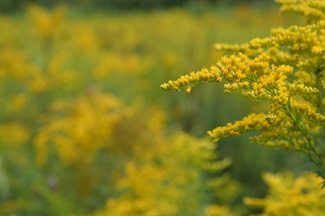 Researchers isolated a previously unknown allergic protein in ragweed that had been exposed to significant levels of NO2. Photo: Thinkstock
 Researchers also came to broader conclusions about ragweed pollen, conclusions supported by work already done in the U.S. earlier this decade on climate change and pollen.
Summarizing, Frank offered a more wide-ranging hypothesis based on the connection their study made between NO2 and allergenicity.
“Ultimately, it can be expected that the already aggressive ambrosia pollen will become even more allergenic in the future due to air pollution.”
Related Reading
All Stuffed Up from Pollen Allergies
10 Biggest Pollen Allergy Questions