

Updated July 20, 2025: The proposed ADDE Act has cleared another hurdle toward becoming law in California. The act would require restaurants to list major food allergens in writing on items on their menus. The bill, known as SB 68, passed in the state Assembly’s Health Committee.
More than 60 community members spoke in support of the bill, before it easily passed the committee in a July 8 vote.
Next, lawmakers in the Assembly’s Committee on Appropriations will consider the proposed legislation on August 28. It would move to the Assembly floor in early September if it passes the Appropriations Committee.
The bill that passed the health committee and is now moving forward includes new amendments that provide more flexibility.
The changes, such as allowing digital labeling and a separate allergen menu, “refine the ADDE Act in ways that strengthen its impact and feasibility,” says Jenna Riemenschneider. She is vice president of Advocacy and Policy at the Asthma and Allergy Foundation of America (AAFA), which is a longtime advocate for SB 68.
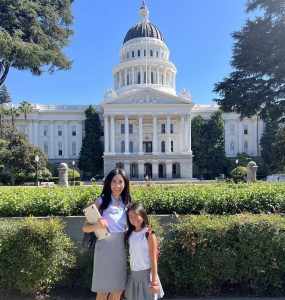
The nonprofit worked to update the proposed legislation with Senator Caroline Menjivar, who introduced the bill that she authored with Robyn Lao. Lao is the mom of Addie Lao, a 9-year-old with multiple food allergies and the inspiration for the ADDE bill. That’s short for the Allergen Disclosure for Dining Experiences (ADDE) Act.
“Our shared goal for this legislation is to ensure it meaningfully improves safety for people with food allergies while remaining workable for restaurants,” Riemenschneider says.
How You Can Help
AAFA continues to organize lobby efforts for the ADDE bill, to ensure supporters’ voices are heard.
“The California Senate has already made a powerful statement for the millions of Californians with food allergies by passing SB 68,” Riemenschneider says. The nonprofit is asking the food allergy community to continue urging elected officials to move SB 68 through the Assembly and eventually to the Governor’s desk.
AAFA is encouraging California residents to fill out the information on the nonprofit’s advocacy link before the August 28 Appropriations Committee hearing. The messages asking for a vote in favor of the bill will be sent to California Assembly members ahead of the committee hearing.
Those who are seeking information on how to help, can reach out to AAFA at aafa.org/advocacyteam. Information about the ADDE Act and ways to help also can be found on the Addie Tells All website.
Stakeholders Get Say on ADDE Allergy Bill
The large food allergy nonprofit FARE is now among the ADDE Act’s supporters, thanks to the amendments. FARE announced its official stance change to “support” on July 18.
“FARE has always supported the intent of the bill,” FARE CEO Sung Poblete PhD, RN said in a statement. “But the legislation needed to be strengthened so that it could work in real-world restaurant settings and enable safer dining experiences for the food allergy community.”
The nonprofit had initially recommended measures that provide flexibility, Poblete told Allergic Living. “We wanted to see a broader, more dynamic approach that allowed flexibility for restaurants to provide the information in the best way possible.”
In April 2025, FARE had submitted a joint letter with the California Restaurant Association (CRA) announcing their opposition to the ADDE Act. The nonprofit also hosted a town hall where Poblete explained concerns with the bill, such as no referencing to digital labeling, a lack of consultation with the restaurant industry and the timeline.
Now, with the addition of the amendments to the proposed law, “we believe that Senator Menjivar is moving in the right direction,” Poblete says. (The CRA said it was not yet commenting on the amendments.)
The goal of the proposed legislation remains clear: to make dining out safer for the millions of Californians like Menjivar and Addie, who both have food allergies. The amendments aim to reduce the cost for restaurants and the state government, while maintaining the bill’s integrity, Riemenschneider says.
In crafting the amendments, AAFA and Robyn Lao met with various stakeholders. These included legislators, food allergy advocates, restaurant owners, and a regional restaurant industry association. They used those insights to collaborate with Menjivar on the ADDE bill’s changes, Riemenschneider says.
“We’ve brought our national perspective, knowledge of international best practices, and expertise on food allergy policy to the table,” she says.
What Are the ADDE Bill Changes?
The ADDE allergy bill amendments include:
- Digital format. In addition to printing allergen information about ingredients directly on a menu, restaurants can provide digital labeling, such as a QR code that links to the food facility’s digital menu.
- Separate allergen menu. If an eatery uses a digital format, it also must “use an alternative method to provide the information to customers who are not able to access the information in the digital format.” Options include an allergen-specific menu, chart or booklet.
- Mobile food operations are exempt. The requirements would not apply to food trucks and carts.
“We support restaurants having options in how best to provide the information to their customers, but in a way that ensures the food allergy community receives what they need to make safe choices,” Poblete says. FARE has provided additional recommendations to Menjivar’s office for consideration as further amendments, she says.
Allergic Living, which supports allergen transparency in dining, is among 35 organizations and more than 500 medical professionals that signed a letter of support for the ADDE bill. Other supporters include the American College of Allergy, Asthma and Immunology, the Food Allergy & Anaphylaxis Connection Team (FAACT), the Food Allergy Nursing Association, and the American Academy of Pediatrics, California.
“AAFA has believed in this bill from the beginning and are incredibly proud of the progress thus far,” Riemenschneider says.
If the bill is passed, the law would take effect in July 2026. It also adds sesame to the list of major food allergens in the California Health and Safety Code.
Related Reading:
Texas Student’s Allergy Tragedy Shows Need for Menu Ingredients
Allergic Reactions in Restaurants are Common, Yet Training Lags