
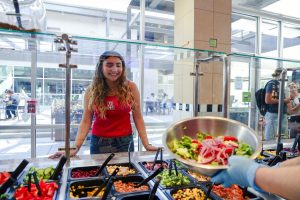
Inclusion and hospitality are key ingredients in Chef Bradley Shannon’s recipe for elevating the dining experience for students with food allergies and special diet needs.
The director of culinary development and nutrition at College of the Holy Cross and his dining staff show incredible dedication to serving delicious allergy-friendly food at the Massachusetts college.
Shannon wants those with allergies to feel at ease, just like other students, as they gather in the dining hall. At the hall’s The Base station – certified top 9-free – they might get sizzling steak tips with peppers and onions, a savory burrito bowl or a comforting gluten-free pasta dish.
The Holy Cross team folds flavor into the sense of community that the former fine dining chef strives to foster on campus. Shannon sees his efforts as rooted in Jesuit traditions and the Jesuit pillar, “Men and women for others.”
“I don’t want anyone to come here and feel like they have to be marginalized,” Shannon tells Allergic Living. “How can we make this more hospitable, how do we make this better for everyone, and what changes are needed?”
Inclusion is a driving force for Shannon and the dining leaders of four colleges whom we feature in this article. Meet these true food allergy champions, who do their utmost to elevate the students’ safe dining experience. But first, let’s introduce you to the colleges.
4 Colleges with Food Allergy Champions
Following are the four featured colleges, and their key allergy-friendly resources:
- College of the Holy Cross in Worcester, Massachusetts. Dining hall includes The Base station (free of the top 9 allergens and gluten). Meals from The Base are also available for pickup at the Lobby Shop in the student center. The separate Gluten Free Zone has meals and grab and go items made in a gluten-free kitchen with a dedicated oven and pans. Allergy-friendly meals are also available at a late-night dining location. Dining information.
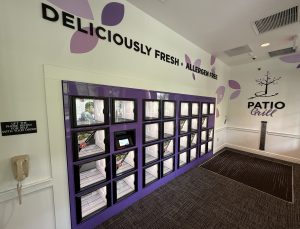
- Miami University of Ohio in Oxford, Ohio. There are two Delicious Without stations (free of the top 9 allergens and gluten) on campus. The Patio Grill, also top 9-free and gluten-free, serves from-scratch meals available for pickup in food lockers. Allergy-friendly prepackaged snacks and microwaveable meals are available at retail locations. Dining information.
- University of Arizona in Tucson. The Radicchio dining hall does not use peanuts, tree nuts or gluten. (Its staff receive rigorous training on allergens in general.) At the dedicated gluten-free Root’d, menu items also don’t contain peanuts, tree nuts or shellfish. Sammy’s Deli features a dedicated gluten-free sandwich case, while the Sweets shop has a dairy-free ice cream machine. Dining halls have dairy-free milk and egg substitutes. Stores have allergy-friendly groceries and grab-and-go items available. Dining information.
- University of Virginia (UVA) in Charlottesville. Has a True Balance station (free of the top 9 allergens and gluten) in each of three main dining halls. The Stress Less Zone, an allergy-friendly pantry, offers prepackaged snacks and ready-to-eat meals with dedicated microwaves and toasters. Dining information.
Meet the Allergy All-Stars
The efforts of Allergic Living’s campus food allergy champions start with allergic students’ need for safe food – but go far beyond. These dining advocates are also ensuring flavorful, nourishing meals, and accommodating busy students’ need for convenience.
“When a leader champions inclusivity, staff members don’t just manage cross-contact, they actively curate a safe, welcoming community for every student with food allergies,” says Betsy Craig. She is founder and CEO of MenuTrinfo, the leading company in allergy training and certification.
Holy Cross’s Bradley Shannon
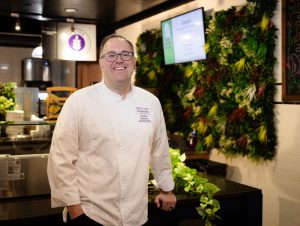
While working as a fine dining restaurant chef in Boston, Shannon cultivated a focus on hospitality. He brought that attitude to Holy Cross when he arrived in the fall of 2022. Shannon has worked to transform the dining options through new dedicated spaces, culinary offerings, training and transparency.
His goal is to go further than “reasonable accommodations” for students with food allergies, celiac disease and other dietary needs. He wants to “elevate reasonable to equal.”
In fact, MenuTrinfo awarded Shannon its 2026 award for “Best Campus Food Allergy Champion” for his efforts at Holy Cross.
“It is really nice to know there is someone looking out for us,” 2026 Holy Cross graduate Elaine Kelly tells Allergic Living. “It’s comforting to feel looked out for and to know there’s always a place where I will be able to eat something.”
Miami University’s Julie Vasilak
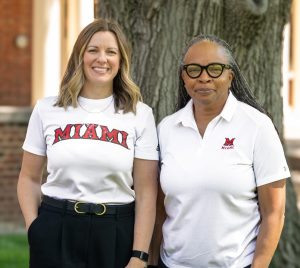
Making students feel at home is paramount to Julie Vasilak, Miami University’s senior registered dietitian. It’s top of mind as she’s curating menus and ensuring allergy-friendly dining spaces for students on campus.
“The comfort you feel walking into your kitchen at home is what we strive for when our students walk into our dining commons and other retail dining,” Vasilak says.
Mary Martin, a senior from Akron, Ohio, has felt this dedication. “I feel that I personally have been advocated for by the dietetics team at Miami.” Martin, who is allergic to tree nuts and peanuts, says the team “are a hidden gem.”
Vasilak works closely with campus dietitian Kathy Adams to ensure a welcoming environment that provides safe, flavorful meal options. “Every student deserves to experience the fun of campus dining without fear,” she says.
University of Arizona’s Christine Carlson

At the sprawling University of Arizona, director of dining and nutrition Christine Carlson believes every student should feel welcome and confident. She stresses this, despite working with more than 30 dining locations.
“Our focus is on providing safe, flavorful, and varied options for students with food allergies and special dietary needs,” she says. As well, “ensuring they never feel limited in their choices.”
Carlson, the registered dietitian, plus dining location managers all guide students with allergies as they navigate their food options on the huge campus. For example, directing them to the ’85 North dining location for dairy-free milk, or the store that has soy butter sandwiches. Or they may offer a primer on allergen menu codes.
Carlson always encourages students to declare their allergies, so allergy kits can be used to prepare their meals. When possible, she will order requested grocery brand items, so these can be purchased through a student’s meal plan.
When creating menus, her team looks for opportunities for allergy accommodation. “What drives us is the belief that every student should feel confident, welcomed, and included when dining,” she says.
National organizations have acknowledged Arizona’s efforts. For example, the National Association of College and University Food Service (NACUFS) awarded Arizona’s program “Special Diet Program of the Year” for 2025.
Junior Dylan Chester finds Carlson’s and her team’s efforts to accommodate reflected in the campus eateries. The political science major from Scottsdale is allergic to tree nuts, and advised to limit gluten and dairy.
“It means a lot to me that someone is advocating so much for students with allergies,” Chester says. “It can be really hard to make a part of your day just deciding what you can eat, while others simply go about their day with ease.”
UVA’s Rahma Rekik
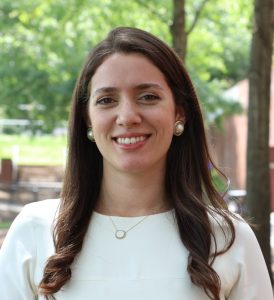
Rahma Rekik links her dedication to providing students with food allergies with a wide range of safe, flavorful dining choices to her roots in Tunisia. The UVA registered dietitian explains that food is tied to culture and connection in the North African country. She believes strongly that “dining should be a source of joy and not fear.”
A conversation with a student with multiple food allergies first helped Rekik understand how anxiety can accompany mealtime for those with food allergies. “Transitioning to college is already difficult and when you add dietary restrictions, it can be very challenging for both students and parents,” she says.
So, in her position at UVA, Rekik advocates for students with food allergies. That includes ensuring there are plenty of safe options for students with medical dietary needs.
“If I can help create a dining experience that is safe, inclusive, and as stress-free as possible, then I’m helping students not just dine, but truly thrive,” Rekik tells Allergic Living.
Josephine Shipper from Westchester County, New York, values Rekik’s efforts. The sophomore, who’s majoring in mechanical engineering, is allergic to dairy and egg.
“She fights hard to improve the UVA allergy space. And she makes the difficult task of eating at college with food allergies feel manageable,” Shipper says. “I’ve felt very included by the UVA dining staff, who worked incredibly hard to take care of all the students with allergies.”
Flavorful Fare: UVA
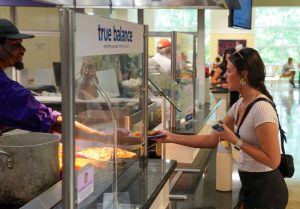
The UVA dining staff’s efforts were recognized with MenuTrinfo’s 2026 award for “Best On Campus Dining Facility” for the college’s Observatory Hill Dining Hall. Rekik credits the dining hall’s caring staff members who take time to build food-allergic students’ trust. “That personal connection makes a meaningful difference,” she says.
At Observatory Hall, taco Tuesday bowls are a big hit. Students grabbing a taco bowl at the allergy-friendly True Balance station are enjoying the same flavors as their peers, just prepared for their needs, Rekik notes.
Burrito bowls for lunch and scrambled egg-free JustEgg for breakfast are among Shipper’s favorites at Observatory Hill. Meantime, frozen burritos and dairy-free yogurt from the Stress Less Zone allergy-friendly pantry feed her midnight cravings.
“The pantry was very helpful when I stayed late at the library or was working on projects,” Shipper says.
Flavorful Fare: Holy Cross
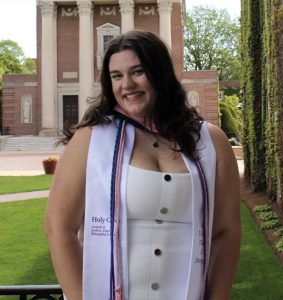
Upon his arrival at Holy Cross, Shannon focused on getting The Base station off the ground, which is certified free of the top 9 allergens and gluten. The station opened at the end of 2022.
Kelly, who was a freshman when The Base opened, says the station gave her a chance to enjoy food that she trusted. “That was really awesome for me, and the food is tasty,” says Kelly from Lynbrook New York.
The balsamic chicken with tomatoes was among Kelly’s favorites from The Base. She must avoid dairy due to eosinophilic esophagitis (or EoE). As a freshman, gluten was also off-limits for her (she now can tolerate it). When the separate Gluten Free Zone opened in 2025, Kelly was delighted to find her favorite GF brand of brownies and cookies.
Rotating global menu items at The Base include beef vindaloo, basmati rice, Hawaiian Huli Huli chicken, and noodle bowls. Only a few ingredients are required to deliver fresh, flavorful meals.
“This is for everyone, with the allergy person in mind,” Shannon says. All of the meals are also nut-free. Peanuts and tree nuts are not used in cooking or in the campus bakery, he notes.
Prepackaged nut products are available for sale on campus, and the catering department does use nuts. The mini cafe where homemade peanut butter is made, is completely separate from the other dining operations, he says.
Flavorful Fare: Arizona
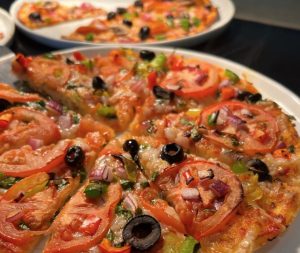
Arizona, which earned a 2025 NACUFS “Best Local Foods Recipe of the Year” award, also prides itself on using fresh, sustainable ingredients. For example, local and high-protein tepary beans, nopales (cactus) and mesquite flour are often featured in campus meals.
“Many of these ingredients are naturally free from the top 9 allergens,” notes Carlson.
Other favorites from campus dining spots include customized salads with grilled chicken. Then there are rice bowls with sautéed vegetables and grilled steak, and acai bowls topped with fresh fruit.
Chester’s go-to spot is the Cactus Grill, an all-you-care-to-eat campus location that offers gluten-free burger buns. “All my friends love it there, so we can all go together,” he says.
Flavorful Fare: Miami
The fact that tree nuts and peanuts are not used in any of Miami University’s cooking provides peace of mind for food-allergic students like Martin. In fact, it factored into her decision to attend the university.
When Martin first visited the campus, she ordered a baked good from the Café Lux coffee shop. “It was the only school I visited where I felt safe just ordering something to eat,” says the senior majoring in biology (premed) and theater. “Having nut-free options takes away the anxiety of eating.”
The campus is considered “nut-friendly” because peanuts and tree nuts are not used in the campus kitchens, Vasilak explains. But sealed nut products are sold in retail stores and in national chains on campus, such as Starbucks and Panera.
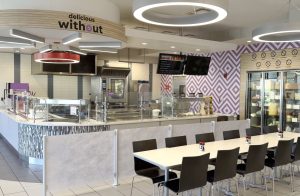
Student favorites at Miami’s two sizable Delicious Without stations include smoothies, vegan baked beans and pulled pork. Martin, who is a vegetarian, also appreciates that the campus salad bars are stocked with diverse, fresh vegetable options.
Chicken or steak kebabs, loaded burger bowls and allergy-friendly pancakes are hits at the Patio Grill, which opened in 2025, Vasilak says. Conveniently, students with food allergies can pick up meals at lockers that have been made from scratch with fresh ingredients. The menu items are free of the top 9 allergens.
“Convenience is a massive part of the modern college lifestyle,” the dietitian notes.
Allergy Champions on Training
Staff training on food allergies is an essential component of allergy-friendly campus dining. Our featured food allergy champions are leaders on ensuring that staff understand how and why to adhere to safety protocols.
MenuTrinfo’s Craig notes that “campus champions – like passionate dietitians and culinary directors – are the heartbeat of the equation.” She finds that “their dedication elevates what their staff get out of our training. They model the empathy and accountability behind the science.”
Food allergy training conducted at each college includes:
- Holy Cross: Shannon leads MenuTrinfo’s AllerTrain and the National Restaurant Association’s ServSafe training sessions in food allergies. He ensures all dining staff receive AllerTrain allergy certification.
- Miami: Dining staff is FARECheck certified, having completed the program in food handling and service for food allergies.
- Arizona: Dining staff complete MenuTrinfo’s rigorous AllerTrainU with a certified master trainer on site.
- UVA: The dining team completes MenuTrinfo’s AllerTrain program.
Training should give staff members “a strong understanding of ingredients, and maintaining consistent practices to actively prevent cross-contact,” Arizona’s Carlson says.
Shannon wants his staff grasp the level of responsibility they have for someone’s safety. For example, that changing gloves, washing hands and using separate cooking tools could mean the difference between a safe meal and one triggering a severe reaction.
“Allergies are not a burden, allergies are something we should be recognizing and adapting to,” he says.
Safety Protocols
From its inception, Holy Cross made The Base station Certified Free From the top 9 allergens and gluten through MenuTrinfo.
For the high-level certification, accredited by the American National Standards Institute and the National Accreditation Board, MenuTrinfo performs a rigorous hands-on audit. The review ensures there are protocols in place and being followed to prevent cross-contact.
Meals at The Base are prepared with products vetted for food allergens in a designated section of the dining hall kitchen. Staff use only designated plates and bowls to serve allergic students.
The food allergy safety efforts also earned Holy Cross the prestigious FARE Gold Check designation in July 2026.
On Arizona’s campus, each dining location is equipped with an allergen kit containing separate cooking equipment such as skillets, spatulas and knives, Carlson says. At the dedicated gluten-free (and newly renamed) Root’d, surfaces and randomly selected menu items are regularly tested for gluten.
Miami’s Delicious Without stations and UVA’s True Balance stations also rely on dedicated equipment, utensils, and designated preparation areas.
“Preventing allergen exposure and cross-contact requires both strong systems and consistent staff practices,” dietitian Rekik says. The True Balance stations also receive audits with MenuTrinfo’s AllerCheck program.
The Patio Grill on Miami’s campus occupies an all-inclusive space where food is stored, prepared and served. Its dishwashing area is also tested monthly to confirm the space is free of the top allergens and gluten. Vasilak says the dining spot’s locker system for easy ordering and pickup helps reduces cross-contact risk.
College Allergen Labeling
Our college dining champions make menu transparency a priority. All four colleges provide clear allergen labeling in the dining halls, along with ingredient lists and allergen information on the websites and apps.
“This empowers students to make informed choices when navigating our various dining stations,” UVA’s Rekik says.
The University of Arizona Nutrition Calculator, which provides ingredient information for menu items, is accessible via mobile app, desktop, and kiosks across campus dining locations. QR codes at Arizona dining spaces provide quick access to digital menus.
“I hate, truly hate, when restaurants don’t put nutrition information online,” says Chester at Arizona. He appreciates that his college provides clear, menu information and the ability to customize based on diet restrictions.
QR codes at Holy Cross spaces, such as the yogurt bar, ice cream station or salad bar also help students navigate menu ingredient information.
Students’ Appetite for Apps

Ensuring that digital menu allergy information is available makes it easier to provide students with mobile ordering options. For example at Miami University, the information on the Dine On Campus app helps students navigate allergies in the dining halls.
Yet, Vasilak notes that, importantly, campus ingredient information is also available on the Grubhub app.
At Holy Cross, students who order through Grubhub will see options organized into sections based on dietary needs, such as gluten-free. Dairy- and egg-free sections are also planned.
Grubhub delivery robots and pickup windows are a part of the convenient lifestyle on Arizona’s campus. While students can already make allergy requests on the app, an additional service will be available this fall.
Carlson says students with food allergies will be able to order food from residential dining locations through a designated Grubhub section. It’s a QR code-based ordering process to conveniently support students’ specific dietary requests.
Grubhub is also a mobile ordering option on UVA’s campus. However in 2024, the university additionally implemented the OrderIT mobile app tailored for students with dietary needs. OrderIT allows students to fully customize meals tailored to their needs and tastes for pickup at dining halls.
Advice from Champions, Students
The adjustment to dining at college with food allergies can be difficult. But these allergy champions and students offer advice on ways to thrive on campus.
Miami’s Vasilak and Arizona’s Carlson encourage students to reach out early for a campus dining tour. And to communicate clearly about any food allergies and dietary restrictions.
“It’s completely normal to feel intimidated at first,” Rekik notes. “But stepping outside of your comfort zone and learning to advocate for yourself makes a significant difference.”
Shipper agrees about advocating as a student. She adds: “Introduce yourself to the dining hall workers, and cultivate those relationships.” The chefs on the UVA campus went the extra mile for Shipper, making special meals for her during finals or checking in just to see how she was doing.
“Having people in the dining hall who care about you and look out for you is one of the things that makes UVA so awesome,” Shipper says.
At Holy Cross, Kelly had discussions with the dining staff and student accessibility services before she arrived for her freshman year. This made a difference in her confidence and her knowledge about steps to take and food options.
“Trust that people want to help you and there’s no shame in asking for that,” says Kelly, who graduated with a degree in chemistry and music.
Shannon urges students to feel comfortable speaking up, especially if something doesn’t seem right. For his part, he will continue to champion inclusivity in the culinary space.
“We’re not changing the menu to accommodate, we’re changing the menu to make it better,” he says.
Related Reading:
Colleges Reviewed: Sacramento State, Mizzou, UNT, Tufts
Colleges Reviewed: Dartmouth, Arizona State, UMD, UNCW
AL’s College Corner: for more reviews and allergy articles