
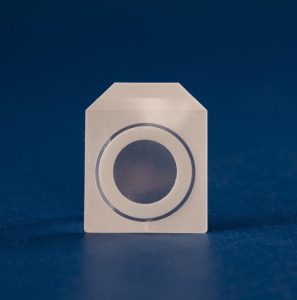
DBV Technologies has launched a clinical trial of its Viaskin Peanut Patch in infants ages 6 to 12 months with peanut allergy.
The trial will assess whether early treatment with this low-dose patch can help infants achieve “ad lib” peanut consumption. That’s the ability to eat peanut-containing foods as much and as often as desired, without reactions.
Infancy may represent a critical window for altering the course of food allergy, says Dr. Douglas Mack, one of the study’s principal investigators. Infancy is a period when the immune system is still highly plastic, or trainable. The hope is that introducing peanut during infancy will lead to greater desensitization.
“We are taking advantage of this immature immune system, redirecting these kids away from peanut allergy into a state where they can eat it ad lib,” Mack says. He’s an assistant clinical professor and pediatric allergy, asthma and immunology specialist at McMaster University in Ontario.
“What’s really exciting with this study is that we are looking at whether we can actually induce long-term tolerance in these kids if we start them early enough.”
Goal: Flexibility in Peanut Eating
The patch is a form of epicutaneous immunotherapy, or EPIT, which desensitizes to allergens through the skin.
The study will enroll 250 peanut-allergic babies at sites in Canada, the United Kingdom and Australia. Peanut allergy will be confirmed through skin tests, blood tests, and a history of allergic reactions. Some infants may undergo food challenges.
Infants will wear the Viaskin patch daily for three years, while maintaining a peanut-free diet. After three years, children will undergo a food challenge of up to 5 grams of peanut protein. That’s equivalent to 20 to 25 peanuts. During a food challenge, children eat gradually increasing amounts of an allergen under supervision.
Depending on how much peanut they can consume without a reaction, some children will stop wearing the patch and transition to regular peanut consumption.
Since keeping peanut in the diet on a regular basis helps maintain tolerance, families will be given guidance on the minimum amount of peanut the kids should consume. The guidance will be flexible to mimic real-world eating habits, Mack says. Kids might be told to eat peanut at least once every two weeks.
If some infants are still highly reactive after three years, they will continue to wear the peanut patch for a fourth year. Those children may also have the option to introduce peanut into their diets, in smaller amounts.
Once they start eating peanuts, the children will be followed for a year. “We are asking, ‘How well can we incorporate this into your diet, just like every other kid?’” Mack says.
FDA Submission in Works

The infant trial expands DBV’s Viaskin Peanut Patch development efforts. The company has previously reported positive results in large Phase 3 trials in peanut-allergic toddlers and young children.
In a study in toddlers ages 1 to 3, 71 percent could eat up to three or four peanuts before reacting. About 46 percent could tolerate more.
In children ages 4 to 7, a trial involving 650 children found 47 percent responded to the treatment at one year. That meant if the baseline dose at which they reacted was 30 milligrams, by 12 months, they were able to tolerate 300 mg or more. If they could tolerate 100 mg of peanut protein at the start, after a year they could consume at least 600 mg.
DBV plans to submit a biologics license application to the FDA for the patch for ages 4 to 7 by the end of June 2026. [Update: The company on June 29 said it now expects to submit this application in the third quarter of 2026.]
A submission for the patch in children ages 1 to 3 will follow. That application is pending data from a supplemental safety study.
Of the new infant study, DBV’s CEO Daniel Tassé says: “We are excited to expand our clinical program into this youngest patient population. We believe that early, non-invasive intervention with the VIASKIN Peanut Patch has the potential to alter the trajectory of peanut allergy in this infant population.”
The Phase 2 infant study, called THRIVE, will use the same patch as the one used for toddlers. It contains about 1/1,000th of a peanut kernel. The patch is applied on the back and rotated daily.
“It’s an extremely low dose,” Mack says. “Over the three-year period, we expect that these children will get the equivalent of one full peanut exposure.”
‘Window Of Opportunity’ in Infancy
Earlier research has shown that intervening early in life may offer the best chances of achieving long-term peanut tolerance.
In 2015’s landmark LEAP trial, babies ages 4 to 11 months at high risk of peanut allergy because of severe eczema or egg allergy were either put on a peanut-avoidance diet or were regularly fed Bamba. Bamba is a puffed peanut snack.
At age 5, the babies fed Bamba had an 80 percent lower risk of developing peanut allergy.
Infancy is a “window of opportunity” because a baby’s immune system is still immature, Mack says. Babies’ antibodies aren’t yet great at recognizing and locking onto things like peanut proteins. IgE antibodies are a major trigger for food allergy reactions.
But that changes as children’s immune systems develop. Older children can produce larger numbers of mature B cells that make highly targeted antibodies.
“If we’re going to get long-term tolerance in these children, [infancy] is the age that we’re going to see this,” Mack says.
Parents who’ve heard about the trial have so far been “extremely enthusiastic,” he says.
“I think the message is getting out there that earlier is better,” Mack says.
Related Reading:
Early Introduction of Peanut Protects Against Allergy, LEAP Study Finds
Allergic Mom: How I Introduced My Baby to My Food Allergens