
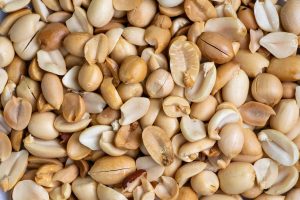
Food products such as roasted peanuts, peanut M&Ms, and peanut butter vary widely in their protein content – not just between brands, but from batch to batch of the same brand.
Individual samples also show big differences in peanut allergen component levels, known as Ara h 1 to 8. Ara h 2 is a key trigger in anaphylactic reactions.
“There is product to product variation, and batch to batch variation,” says Dr. Stephen Tilles, study co-author and an allergist from Washington state. “Another source of variation is the Ara h allergens in the protein.”
This inconsistency could impact both food challenges and oral immunotherapy (OIT), Tilles says.
Oral food challenges test how much of an allergen patients can tolerate before starting to react. Patients start by eating a small amount of their allergen. They gradually progress through higher amounts of the food over several hours.
Though food challenges are considered highly accurate, it’s important to know how much allergenic peanut protein patients are actually consuming, says Tilles.
Knowing precise amounts of peanut protein can also matter in OIT, particularly for highly reactive patients. In OIT, patients start by eating a small amount of their food daily. Over the course of several months, they gradually increase the amount consumed.
“There is a reason peanut allergy has been so intensely studied over the past 20 years. It’s because there are exquisitely sensitive patients out there, and there are a lot of them,” Tilles says.
“For the parents and children who are highly sensitive to very low doses, we owe it to them to understand exactly how much we are giving them if we are starting them on a daily treatment,” he says.
The study was presented at the 2025 AAAAI/World Allergy Joint Congress in San Diego.
Peanut Allergen Levels: Big Differences
Tilles and colleagues analyzed five different lots of seven categories of peanut products. These data were generated by scientists at Stallergenes Greer, the allergy therapeutics company. Six of the categories included roasted peanuts (from the U.S. and Europe), peanut butter, freeze-dried peanut butter, freeze-dried peanut kernels, peanut M&Ms (made in the U.S. and Europe), and peanut puffs (the brands Bamba and Curly).
The team also measured protein and components in the 300 milligram (mg) sachets of Stallergenes Greer’s Palforzia, the only FDA-approved peanut OIT product. Palforzia peanut powder, produced with strict quality controls, was approved for children ages 4 to 17 years in 2020. The FDA expanded Palforzia’s approval to include peanut-allergic toddlers ages 1 to 3 in July 2024.
At the start of Palforzia’s pivotal trial, the median amount of peanut children ages 4 to 17 could tolerate before reacting was tiny. Tilles says they reacted to 10 milligrams (mg), about 1/30th of a peanut.
Not surprisingly in this analysis, Palforzia lots and samples had the least variation in the amount of peanut protein and peanut allergen components Ara 1 to 8. The maximum variation in peanut allergen among Palforzia 300 mg sachet samples was never more than twofold.
The other peanut-containing products sold in individual units (such as a candy or a puff) had between two and 273 times the amount of peanut allergen per each unit.
Products such as freeze-dried peanut butter and peanut kernels had the widest variation in allergen levels. With freeze-dried peanut kernels, there was a notable difference – as much as a 767-fold difference in allergen component levels.
Other products, such as Bamba puffs, were more consistent. Bamba is often used to introduce peanut allergen into the diets of infants to prevent peanut allergy, such as in the landmark LEAP study.
Does One Size Fit All?
So is the allergist recommending all kids start peanut OIT using Palforzia because of the greater uniformity of dose and peanut protein? Not necessarily.
Some children with peanut allergy may be able to tolerate one or more peanuts before starting to react. A recent study found some of these kids who have a higher threshold can be effectively and safely desensitized using peanut butter.
“Personalizing makes all the sense in the world. The patients are all over the place in terms of how sensitive they are and what their histories are,” Tilles says. “Peanut allergy can be scary.”
Related Reading:
Trying Pistachio OIT First, May Ease Cashew OIT
Palforzia Launches Its Approved Peanut OIT for Toddlers
Allergy Mom Video: Silver Lining in a ‘Failed’ Food Challenge