
For years, I have reported on hidden allergens in airline meals, warning that passengers with life-threatening food allergies cannot make informed decisions if they don’t have complete ingredient information before they eat. The goal was simple: to help prevent a tragedy.
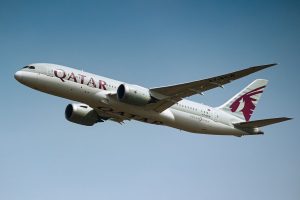
Sadly, a newly filed lawsuit says that such an in-flight tragedy has already occurred. The family of Pennsylvania teenager Jason Hu say that he died on a Qatar Airways flight in August 2024, after eating one of the sandwiches the crew were distributing.
The family’s lawsuit says the teen and his father Eric Hu both informed the flight attendant that Jason had severe allergies to peanuts, dairy and fish. The federal lawsuit alleges that a crew member told Jason the sandwich was safe for him to eat.
The suit says that immediately after eating, the teen began having breathing distress, a symptom of a severe food-allergic reaction. He soon collapsed, according to his father and his sister, who also traveled with him.
The lawsuit alleges a flight crew member gave a “specific assurance” that the sandwich was safe for him to eat. According to the complaint, that assurance “directly induced Jason to consume the allergen.”
The Hus had been visiting China and were on their second flight on August 21, 2024, from Doha, Qatar to New York City, when Jason ate the food.
The family is now suing Qatar Airways related to serving Jason the sandwich, the airline’s medical response and what they describe as emergency equipment deficiencies. The lawsuit, filed in U.S. district court, also makes claims against MedAire, the airline’s ground-based medical support provider.
Allergic Living has asked Qatar Airways for comment on the lawsuit and their emergency response, but has not received a reply.
Lawsuit Criticizes Emergency Response
Jason is the first-reported passenger to die of a severe food-allergic reaction on a flight headed for U.S. airspace.
According to the complaint, as his breathing distress began, the teen used his own nebulizer. But it “failed to provide any relief.”
The lawsuit alleges that then “a flight crew member administered an unknown injection to Jason, which also failed to provide any relief.” The Hu family’s attorney Steven Barrett confirmed to Allergic Living that the airline supplied that injection, and he assumes it was epinephrine.
However, in Jason’s severe reaction, he says this injection “did not have any effect.” No word yet on whether Jason had been carrying epinephrine during his trip.
Crew members also attempted to administer oxygen using a portable oxygen tank. But according to the complaint, it “was not operational and/or did not work.” Jason soon collapsed and, according to the lawsuit, apparently died.
The lawsuit is highly critical of the emergency response to assist Jason. It alleges that Qatar Airways failed to ensure its emergency medical equipment was functioning. It also alleges deficiencies in crew training, asserting that crew members were not adequately prepared to respond to food allergy notifications, operate emergency medical equipment or manage in-flight medical emergencies. The complaint further alleges failures to establish adequate procedures for passenger food allergy safety.
The complaint says MedAire was responsible for providing real-time medical support to the flight’s crew, as well as supplying the airline with medical equipment and training. The lawsuit contends that MedAire failed to ensure emergency equipment was operational and properly maintained. It further alleges that MedAire failed to adequately consult with the flight crew, follow established emergency protocols or provide appropriate recommendations concerning medical diversion.
The allegations in the family’s lawsuit are yet to be tested in court.
Emergency Kits and Epi Issues
According to the complaint, Jason “was believed to be deceased and remained laid out behind his father and sister for the remainder of the flight, with a non-operational oxygen mask remaining on his face.”
As the parent of a child with food allergies, it is an image I cannot get out of my head. Only after the aircraft landed at John F. Kennedy International Airport was Jason officially pronounced dead.
While the lawsuit gives only the family’s side, it sets out familiar air travel and food allergy concerns. Only in this case, with tragic consequences.
Through my reporting, I have spoken to several physicians who discovered incomplete emergency medical kits (EMK) aboard aircraft. Some treating anaphylaxis found only the cardiac concentration of epinephrine. Others encountered epinephrine in unfamiliar delivery devices, or no epinephrine at all. In one example, New York allergist Dr. Anna Nowak-Wegrzyn opened an EMK only to find a sticker that read, “No epi in kit.”
The Hu family’s lawsuit is also not the first to raise questions about how airlines communicate with passengers who have severe food allergies.
Earlier this year, Allergic Living reported on a lawsuit filed by NYU emergency physician Dr. Doreen Benary against Singapore Airlines. In that complaint, Benary says she informed the airline of her shrimp allergy before a flight from Frankfurt to New York. The lawsuit says she was mistakenly served a meal containing shrimp, triggering severe anaphylaxis. The pilot diverted the aircraft to Paris.
The issue extends beyond in-flight meals served in error. In 2023, Allergic Living reported on Skylar Sloane, who suffered anaphylaxis aboard a Delta flight after eating pasta. The meal’s label only listed milk, wheat and soy as allergens. As she began reacting, she realized the meal also contained tree nuts.
Lack of Labels on Airline Meals
More recently, I reported on two separate allergic reactions involving the same carrot hummus served on American Airlines. In one case, a 5-year-old required epinephrine after her mother says she was initially assured the meal contained no nuts or eggs. The hummus, in fact, contained cashew.
These cases involve different airlines, different circumstances and different communication failures. Yet they expose the same problem: passengers with life-threatening food allergies can only make safe decisions if the information they receive is accurate.
In the U.S., airline meals are not required to carry the same comprehensive allergen labeling as packaged foods sold in grocery stores. Although the FDA has told me it encourages greater transparency, complete ingredient labeling is currently not required.
There is also no global standard requiring airlines to provide passengers with complete allergen information for airline meals. Even well-intentioned crew members may not realize the information available to them is incomplete and may unknowingly reassure a passenger that a meal is safe.
I continue to believe the safest advice for anyone with a life-threatening food allergy is to always carry your epinephrine and to bring your own food whenever possible. Until passengers are consistently provided with complete ingredient information before they eat, no airline meal is worth the risk.
Lianne Mandelbaum is Allergic Living’s airlines correspondent, and the founder of NoNutTraveler.com.
Related Reading:
Anaphylaxis Over the Ocean: MD Finds No Epi Vial in Plane’s Kit
The Trouble with Airline Meals and Food Allergies