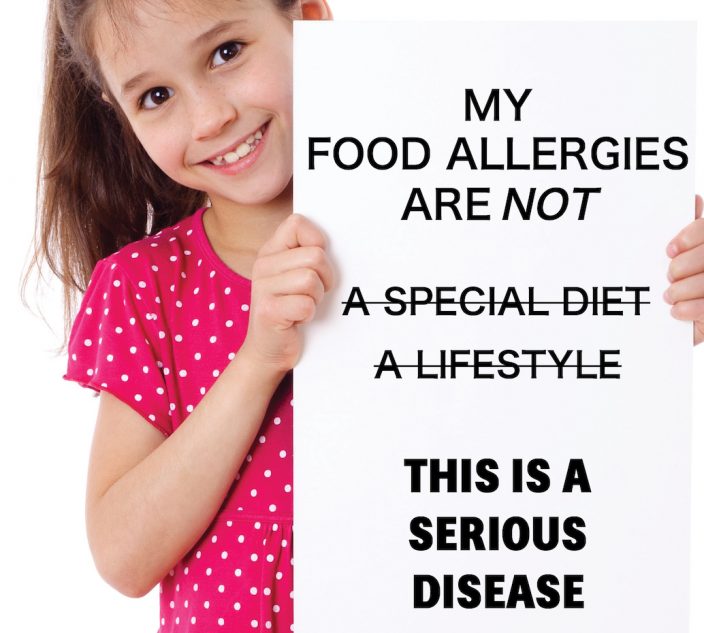

Food allergy experts want to make an impact on patients’ lives during infancy. Early prevention, diagnosis and treatment are vital to altering the allergic path, say participants in a panel hosted by the Food and Drug Administration.
The FDA roundtable explored the growing prevalence of food allergies, current scientific research, new therapies, the mental health effects, and financial burdens.
The agency hopes the discussion, held February 25, 2026, helps efforts to get to the bottom of, “the modern epidemic of food allergies,” said FDA commissioner Dr. Marty Makary. “Our job today is not to look back, it’s to look ahead.”
The panelists touched on vital information about the current state of food allergies, which affect more than 33 million Americans. In the United States, 1 in 13 children and 1 in 10 adults have a food allergy.
Dr. Ruchi Gupta, who has published key studies on food allergy prevalence, pointed to the incidence of infant allergy diagnoses to highlight the volume of new allergy cases. For example, there were about 80,000 new peanut allergy cases and about 70,000 new milk allergy cases in the United States in 2024.
The panel discussion about prevention and emerging therapies is an important step, says the professor of medicine at Northwestern University’s school of medicine in Chicago. Gupta is also the founding director of the Center for Food Allergy & Asthma Research (CFAAR) at Northwestern.
“Finally, now we are coming together to talk about how we can turn this tide,” she says. “I really think we can do this together.”
FDA Panel: Early Allergen Exposure
Panelists stressed that it’s crucial to move on from the old recommendation to avoid feeding allergens to children during infancy.
“For decades we’ve been managing [food allergy] prevention and treatment with avoidance,” says Dr. Gideon Lack, a professor of pediatric allergy at King’s College London. “The pendulum has shifted now where we are exposing early to prevent and diagnose early and treat early.”
The landmark 2015 LEAP study, which Lack co-authored, found that early peanut introduction in high-risk infants reduced peanut allergies by more than 80 percent. Those science-based findings countered previous medical advice to avoid peanuts before the age of 3.
Lack noted during the FDA discussion that starting to consume peanuts early in life achieved long-term tolerance in participants. Follow-up studies clearly show this.
Now medical advice is in line with the LEAP findings. The recommendations are to feed potential allergens like peanut to infants as young as four to six months, as a food allergy prevention strategy. He pointed to federal dietary guidelines from 2020 and 2025 that feature early introduction of potentially allergenic foods.
Eczema and Early Feeding

However, Lack notes that the language, such as targeting only infants with severe eczema, should be less restrictive.
“If we only introduce peanut early to the infants who have severe eczema, we’re missing the large majority of infants who are going to develop food allergy,” said Dr. Corinne Keet. She is a professor of pediatrics at the University of North Carolina’s (UNC) school of medicine and vice chair of clinical and translational research.
Eczema, which is seen as the strongest risk factor for developing food allergies in early childhood, should be factored in, regardless of severity, Keet says. Since even mild and moderate eczema significantly increases food allergy risk, she says it is important not to delay introduction of allergens for those infants as well.
“We need to reassure families that early introduction of peanut and other foods is safe and effective at preventing food allergy,” Keet says.
Food Allergy’s Burdens
Beginning with the first diagnosis, families navigating food allergies are sifting through messages from healthcare providers, researchers, regulators and companies.
Caregivers and patients are coping on a daily basis to adjust to a diagnosis and changes that come with it, says Dr. Linda Herbert, a clinical psychologist at Children’s National Hospital in Washington D.C.
Families are tackling challenges such as finding safe foods, learning to use epinephrine auto-injectors, social situations, allergic reactions, and life changes.
“It is both common and expected that this is stressful and burdensome and can contribute to significant anxiety at times,” says Herbert, PhD. She is the director of psychology research and clinical services in Children’s National’s Division of Allergy and Immunology.
Sung Poblete, PhD, RN also noted the “profound emotional burden” that food allergy places on Americans, in addition to ”the physical and economic burden.” The CEO of the nonprofit FARE says it’s essential to remove financial barriers to early food allergy introduction and patient access to treatments.
Of the estimated $24.8 billion cost of pediatric food allergy in the United States, food-allergic families are shouldering more than $4,000 each year per child, Gupta notes.
That economic burden could be lighter if federal agencies support the implementation of the guidelines for early allergen introduction, Poblete says. For example, expanding the offerings in the USDA’s WIC (Special Supplemental Nutrition Program for Women, Infants, and Children) to include infant-safe allergenic foods.
“This is not simply sound policy, it is population level disease prevention,” Poblete says.
Emerging Treatment Options

Panelists also discussed various treatment options that are already in use or on the horizon.
Immunotherapy treatments, such as oral immunotherapy (OIT), aim to prevent allergic reactions from accidental exposures to an allergen. In the process called desensitization, patients consume a gradually increasing amount of an allergen, such as peanut or nut, until they reach a maintenance dose. Regular consumption of that dose then affords some protection against the allergen.
While OIT is especially effective in toddlers, many patients are not able to experience the benefits of OIT, says Dr. Edwin Kim, a pediatric allergist at UNC. One reason is a lack of access because a small number of allergy offices offer OIT, he says.
“It’s really important right now that we are able to try to find simple and safe options that can be broadly administered,” says Kim, who is the director of UNC Food Allergy Initiative.
He sees other forms of immunotherapy, such as sublingual (SLIT) and epicutaneous (EPIT) as potential options for a wider range of allergists.
SLIT involves administering a small amount of liquid allergen under the tongue, while EPIT uses patches that contain the allergen placed on the patient’s skin. Kim points to two UNC studies that show positive results for both therapies in toddler patients.
As well, many patient families are hopeful about the biologics and related biosimilars that have emerged on the allergy treatment landscape. For example, injectable Xolair (omalizumab) was approved in 2024 to target IgE antibodies to prevent allergic reactions from multiple allergens.
Regardless of the chosen treatment path, experts agree that early diagnosis and early therapy are key. “Everything seems to point toward the earlier we can get in there … the better,” Kim says.
FDA Collaboration on Food Allergies
While scientists are advancing knowledge about food allergy prevention and treatment, they rely on regulators to review data to approve therapies.
FDA representatives addressed the possibility of finding ways to streamline the approval of allergy treatments to correspond with early intervention.
The FDA’s Ronald Rabin noted that the knowledge his staff has gained through the experience of reviewing clinical trials can be applied to help achieve a more streamlined approach. He is chief of the Laboratory of Immunobiochemistry in the Center for Biologics Evaluation and Research.
“We’re capable of thinking outside the box,” Rabin says.
Federal experts and scientists fostered an enlightening discussion about prevention, scientific data and treatment access. Now, readers can visit the docket to comment on the FDA food allergies panel by April 25, 2026.
“The patient voice is an integral and critical dimension of what FDA does,” Poblete says. “As we look ahead, it’s clear that meaningful progress in food allergy will require both scientific ambition and regulatory urgency.”
Related Reading:
FDA Weighs Moving Food Allergen Warnings to Thresholds System
Early Peanut Introduction Linked to Drop in Child Food Allergies