

After three years of treatment, 71 percent of toddlers using the Viaskin Peanut Patch could eat up to three or four peanuts before reacting. About 46 percent could tolerate even more, new research shows.
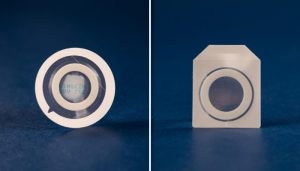
The patch, developed by DBV Technologies, gradually exposes peanut-allergic children to their allergen through the skin to desensitize them.
DBV Technologies plans to seek Food and Drug Administration approval for the patch in 2026. With positive, top-line trial results in kids ages 4 to 7 released in December 2025, the company expects to submit a biologics license application for that age group in the first half of 2026. A second submission – for toddlers ages 1 to 3 – will follow later in 2026.
“More than 1,000 children have been part of the trials,” says Dr. Pharis Mohideen, DBV’s chief medical officer. “We really have a lot of data on this product.”
Encouraged by its results in toddlers, the company also plans to launch a study in even younger children, ages 6 to 12 months. Set to begin in 2026, it will be one of the first immunotherapy trials in peanut-allergic children under a year-old, Mohideen says.
“The younger you are when you start an allergen intervention, the more robust your treatment response tends to be, not only for Viaskin but for other allergen immunotherapy,” he says.
Desensitizing Toddlers
The findings from the toddler study, called EPITOPE, were presented at the 2025 American College of Allergy, Asthma & Immunology (ACAAI) annual meeting in November 2025.
The children were ages 1 to 3 when they enrolled in the Phase 3 trial. It randomly assigned 362 peanut-allergic toddlers to receive either the Viaskin patch, which contains about 1/1,000th of a peanut kernel, or a placebo patch. The patch is applied to different spots on the back and rotated daily.
After the first year, about 67 percent of children were considered responders. That meant they could eat up to 1,000 milligrams (mg) of peanut protein – about 3 to 4 peanuts – before starting to react. A smaller group of highly sensitive children were considered responders if they could tolerate 300 mg, or about one peanut.
Protection improved over time. In an open-label extension where all participants received the active patch, 81 percent could tolerate 3 to 4 peanuts after two years. About 56 percent could tolerate 12 to 14 peanuts. After three years, 68 percent could eat that much.
The latest toddler study data is from 56 children who were originally on the placebo patch. They have now received three years of treatment. Their results were slightly lower than the original group of toddlers. Mohideen says this is likely due to the smaller sample size, or potentially the one-year delay in starting therapy.
“That one-year delay, as small as that sounds, could have had an impact on this cohort,” Mohideen says.
Reactions during oral food challenges also became milder with time. There were no cases of treatment-related anaphylaxis in the third year. The most common side effect was mild skin irritation at the patch site, although this too decreased over time.
FDA Submission in 2026
In December 2025, the company released initial results from VITESSE, a Phase 3 clinical trial that tested the patch in more than 600 kids ages 4 to 7. The study met its primary endpoint, with 47 percent of children using the patch responding to the treatment at one year. That compared to 14.8 percent who responded in the non-treatment or placebo group.
Children in the treatment group could tolerate at least 300 mg of peanut protein in an oral food challenge at 12 months. This indicates increased protection against an accidental allergen exposure.
The desensitization levels after one year of treatment “are highly clinically meaningful and represent substantial progress towards a well-tolerated, non-invasive potential option that I believe would be welcomed into pediatric care,” said Dr. David Fleischer. The allergist and professor of pediatrics at Children’s Hospital Colorado is the principal investigator on the VITESSE study.
The most common treatment-related adverse events were skin reactions at the patch application site.
The results put the company on track to submit its biologics license application to the FDA for the patch in kids ages 4 to 7 in the first half of 2026.
The submission for the patch in children ages 1 to 3 is pending final safety data from a supplemental safety study. Called COMFORT Toddlers, that study “is well underway,” Mohideen says.
“Based on the million patch days we have and the safety profile that we’ve seen, we are quite confident the safety profile will report out as we think it will,” Mohideen says.
Next Up: Infant Study Planned
With the strong results in toddlers, DBV now plans to test the Viaskin Peanut patch in younger infants. That four-year study will take place at sites in the U.S., United Kingdom, and Australia. It will examine whether starting treatment that early could lead to true tolerance, meaning children could freely eat peanuts as often and in whatever quantities they chose.
“Because of the practicality and ease of use of the patch, and the very high retention rates we’ve seen in our studies, we feel this is natural next step,” Mohideen says. “What a lot of our families are looking for is to move from desensitization to ad lib consumption.”

Infants in the study will have a confirmed peanut allergy. After three years of daily patch use, children will undergo a food challenge during which they eat gradually increasing amounts of peanut under supervision.
Children who pass will be able to introduce peanut products into their diet. The goal, Mohideen says, is to give families relief from both the anxiety of accidental exposures and the rigid daily dosing required of oral immunotherapy (OIT).
Dr. Edwin Kim, an assistant professor of allergy and immunology at the University of North Carolina at Chapel Hill, said he’d welcome the patch as a treatment option for families of children with peanut allergy.
Kim says Viaskin could appeal to families who want to treat peanut allergy but are reluctant to give omalizumab (Xolair) injections to their child. The FDA approved Xolair for food allergies in 2024, for protection against serious reactions to accidental ingestion.
Likewise, OIT is effective, but it has a higher risk of reactions, Kim says. Currently, there is one FDA-approved OIT on the market for children ages 1 to 17, Palforzia, which contains precise amounts of peanut allergen in its formulation. Some allergists use peanuts from grocery stores for OIT as well.
Because the patch can be quickly applied and forgotten for the day, families may not find it too difficult to use it year after year, he adds. “The potential is there for very big outcomes,” Kim says. “The feasibility makes it realistic.”
Article updated Dec. 21, 2025 with latest results in the 4-to-7 age group.
Related Reading:
Nasal Epi Spray Proves as Effective as Injection in Anaphylaxis
Palforzia Launches Its Approved Peanut Allergy OIT for Toddlers