
Attorneys are taking aim at the allergen labeling systems at grocer Stew Leonard’s in a lawsuit over Órla Baxendale’s fatal allergic reaction. The ballet dancer died of anaphylaxis to peanut, after eating a cookie sold by the chain that was mislabeled.
Attorneys for the Baxendale family have filed a revised version of their legal complaint. The substitute document contends that systemic shortfalls at Stew Leonard’s contributed to the 25-year-old’s death.
The systems are “broken, unreliable, inherently dangerous, undependable, untrustworthy, erratic, and deplorable,” states the complaint, filed October 16 in Connecticut Superior Court in Waterbury, Connecticut.
Órla, who had severe allergies to peanuts and tree nuts, died on January 11, 2024. The package label on the Vanilla Florentine cookie that triggered her deadly reaction did not include peanut as an ingredient. Nor did the label show peanut in the “contains” statement.
The cookies were bought at a Stew Leonard’s supermarket in Connecticut, and made by supplier Cookies United. The Baxendale family is suing the Connecticut-based Stew Leonard’s chain, individual store employees, as well as Cookies United.
The substitute complaint incorporates information gleaned from state and federal investigations into the supermarket chain’s procedures regarding allergens. It updates the original complaint filed by the Baxendales’ attorneys at New York City firm Gair, Gair, Conason, Rubinowitz, Bloom, Hershenhorn, Steigman, and Mackauf.
Incidents of multiple product recalls at Stew Leonard’s for incorrect allergy labels are highlighted in the lawsuit as evidence of what the attorneys call systemic shortfalls.
“Only after Órla’s passing, did someone see how many problems they truly had,” attorney Jake Shooster, an associate at the firm, tells Allergic Living. “It demonstrated woeful ignorance.”
Stew Leonard’s did not respond to Allergic Living’s request for comment.
Ruling on Individuals, Wrongful Death
The substitute complaint follows a significant ruling in August 2025. The judge on the case granted the grocery chain’s motion to dismiss the wrongful death charges against individual defendants, including CEO Stew Leonard Jr.
However, the judge ruled that the companies Stew Leonard’s and Cookies United could still be held liable under the Connecticut Product Liability Act. The substitute complaint reflects that order. It brings product liability counts against Stew Leonard’s Holdings, LLC, Stew Leonard’s Danbury, LLC, Stew Leonard Jr., and Cookies United.
In addition, the updated complaint includes a wrongful death count against some individual employees. Another wrongful death count focuses solely on Stew Leonard Jr.
The separate count for the grocery CEO reflects his “global responsibility” as opposed to the responsibilities that other individual defendants have, explains attorney Howard Hershenhorn, a partner in the firm representing the family.
The individual employees had been part of an email exchange that is a point of controversy between supplier Cookies United and Stew Leonard’s.
Shortly after Órla Baxendale’s death, Stew Leonard Jr. said the New York-based cookie maker had not informed the supermarket that the cookie ingredients had changed to include peanuts.
But Cookies United said it had sent a notice to Stew Leonard’s in July 2023 about the addition of peanut. It noted that several employees got an email about the change.
It is likely that the defendants will file another motion to dismiss the individual wrongful death charges. But “we’re trying to hold them accountable, and not just under their employment with Stew Leonard’s,” Hershenhorn says.
Orla Lawsuit: Chain’s Recalls
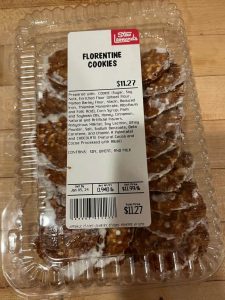
The family’s substitute complaint sets out instances from before and after Órla’s death that involved inaccurate allergen labeling on Stew Leonard’s products.
Following the Connecticut Department of Consumer Protection’s investigation into Órla’s tragedy, Stew Leonard’s accepted a voluntary compliance agreement in June 2024. It outlined requirements, including hiring an internal compliance manager, maintaining written storewide policies and procedures for accurate labeling, and providing annual employee procedure training.
However, the Baxendale lawsuit points to subsequent allergy recalls as evidence of continuing shortfalls with the grocer’s allergen labeling system. For example, in February 2024, several chicken salad and shaved chicken products were recalled because they did not carry a “may contain milk” label.
As well, the chain issued a recall in October 2024 because chocolate chunk banana bread did not disclose walnuts as an ingredient.
The Food and Drug Administration also investigated the mislabeled Florentine cookies, like the one Órla ate, that were recalled on January 23, 2024. The FDA issued a warning letter to Stew Leonard’s in late 2024 that lists “significant misbranding violations tied to undeclared allergens in its cookie products.”
The agency found that the Florentine cookies were misbranded under the Federal Food Drug & Cosmetic Act labeling law. Ingredients that are major food allergens must be listed in the ingredients and, optionally, in an adjacent ‘contains’ statement.
Orla Case: Punitive Damages Allowed

In her August 2025 ruling, the judge denied the defendants’ request to strike punitive damages from the lawsuit. Hershenhorn considers that a “huge win” for the Baxendale family.
“Punitive damage is not an easy threshold in Connecticut,” says Hershenhorn. “The judge found there is enough evidence for punitive damages.”
In her August ruling on the Baxendale lawsuit, the judge points to another case, Roome v. Shop-Rite Supermarkets. In that 2006 case, blueberry bread that contained nuts not listed on its label resulted in a customer suffering anaphylactic shock.
The judge drew a comparison to the court’s decision in the Shop-Rite case to allow punitive damages in her ruling as well. “Despite the obvious danger to customers with nut allergies, [the defendants] failed to ensure that the cookies were properly labeled upon repackaging,” the order states.
In addition to punitive damages, the Baxendales’ lawsuit seeks monetary damages, attorneys’ fees and other costs.
Persistence for Baxendale Family
Hershenhorn says the family’s attorneys are determined to prevent a repeat of the tragic loss that the Baxendales have suffered. Órla’s parents Simon and Angela Baxendale, along with her sisters Niamh and Ciara, and her brother Rowan, live in England.
Órla, the youngest sibling, moved to New York City in 2018 to pursue her promising dance career.
The talented dancer began at The Ailey School and was with the Connecticut-based Momix Dance Company at the time of her death. She was one of the dancers performing as Alice in Wonderland in Momix’s production of “Alice” when tragedy struck.
Throughout multiple motions and rulings in the case, the big picture hasn’t changed, Hershenhorn says.
“Stew Leonard’s has done nothing to progress the case forward except for obfuscate and attempt every potential procedural maneuver,” he says. “We’re having none of it and we’re right back in their face at every point to make sure this never happens again.”
Related Reading:
Grieving Colleagues Recall Dancer’s Food Allergy Vigilance
After Son’s Nut Allergy Tragedy, Mom Urges Wide Epi Access