As a woman with multiple food allergies, I’d navigated pregnancy, delivery, hospital food issues, and doing early allergen introductions with my infant. The previous articles in my Food Allergic and Having a Baby series reveal that I’d learned to expect the unexpected.
But now my son was 12 months old and I was entering uncharted territory. How would I manage my severe food allergies around my child’s potential new friends – other people’s kids?
Once he was a year old, I started taking my son to a weekly caregiver and tot nature club. At the end of each month the Sprouts would have a teddy bear picnic. They’d bring their favorite stuffy, and their parent or caregiver would bring a snack to share with the group.
The kids would each go around the small circle of fellow Sprouts and offer a snack. Then we’d settle in with our goodies and enjoy storytelling and songs, followed by a hike.
This potluck snack party was intended to teach the kids about sharing and bonding over food. These are lessons that I am all too aware of, and most often haven’t been able to participate in. That’s because I’m allergic to peanuts, nuts, dairy, soy, and most legumes. As a child, I typically brought my own food and sat out these situations.
However, as a 1-year-old, my son had no known food allergies. He was free to exchange snacks with the other kids.
The week before each picnic, the group leader would ask everyone to disclose any food allergies or diet restrictions. Snacks were to be safe for everyone. I felt very uncertain – should I tell them about my own allergies? After all, the club’s activities were more about the kids, and I didn’t have to eat. But was that missing the point of the exercise?
I settled on telling the group that I have a long list of severe food allergies, and that I would not participate.
My Son’s Left Out: ‘Why Mommy?’
At the first picnic playdate, I didn’t let my son enjoy a muffin that one of the mothers had made because it was not safe for me. I wasn’t mentally prepared to touch it, then do our wipe-down ritual to make sure there was no cross-contact. It was easier to say no on my son’s behalf.
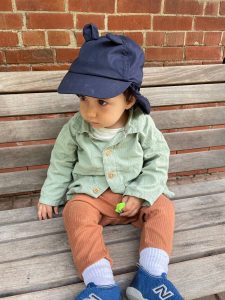
A look of disappointment passed across his face. I recognized emotions that I too often felt as a kid. He shared a few two-word sentences. “Why mommy? No, me! Want it.” He pointed at the other kids, as if to say, “why can they have it and not me?”
I was disappointed in myself, and decided to revise my approach.
My son already had plenty of empathy for mommy from his experience of my food allergies in our daily lives. He didn’t need to feel unnecessary exclusion. (To read about how I introduced my allergens to my infant son, see this article.)
I brainstormed solutions to the picnic dilemma – I could use a fork to feed him, and pop into the restroom to clean us both up. This was something I could handle, and it would get easier with practice.
At the next gathering, I exhaled a sigh of relief that all but one of the other kids brought fresh berries. And when a piece of cheese was offered, I let my son take one by himself. It was such a simple act, yet he was glowing at the chance to fully participate.
Little Friends and Cheesy Crackers
There have been countless times that I’ve had to balance keeping myself allergy-safe with not upsetting a small child. This is challenging to explain to kids who are just learning to express themselves.
One day my son’s friend ate a cheesy cracker, then wanted to hold my hand. I did a quick calculation. I could take his hand as long as I made sure not to touch my face and then washed my hands as soon as possible. My level of reactivity is such that I can tolerate light skin contact with an allergen, if I wash well afterwards. It also would be a teachable moment between me and the child’s parent.
I can’t recall the last time I went to a park and didn’t see (or step on) a Goldfish cracker. As a mom with a severe dairy allergy, it feels like I’m suddenly 7 years old again. Here I am, cautiously navigating the schoolyard, and avoiding cheesy cracker dust on the play structures.
When toddlers are around, food will be flung. Young kids are sweet, high-spirited – and messy. Like the 3-year-old having an energy surge who heaves his cupcake across the room. Toddlers are wonderfully loose cannons, as they should be.
The more I was in these situations, the less shocking they felt. I’d grown up with allergens in my home, so I am comfortable being near them. As an allergic mom, however, playdates required keeping my radar up – and lots of explaining. Launching into my allergy spiel to other parents often felt awkward.
Navigating other children and your allergens requires thoughtfulness. I never want to gloss over my allergies or send the message that they are not severe. However, I also don’t want to shame a toddler or upset them for not understanding allergies.
Allergic Mom Finds Playdate Bliss
Awareness with small kids is built slowly with repetition, patience, and grace. At our playdates, I’ve found a gentle and welcoming approach works best.
“Here, let me help you with those crumbs,” I will say, while wiping the hand of a child I know well. I’ve also learned to be steadfast without coming off as stern. If a kid or their parent thinks you are unapproachable, open communication becomes nearly impossible.
On the other hand, making friends with parents of young kids can be blissful. Everyone self-carries their own meals and snacks. My pocketfuls of granola bars are the norm. Whether going to the park, a museum, or an activity, I am never the only one who brought their own meal.
In the young toddler stage, I found myself planning playdates and outings without having to navigate restaurants and lunchtime. At 11:30 a.m., after a couple hours of play, everyone would depart for nap time.
Partners Amid Cheesy Crackers & PB
I also came to appreciate those moms for whom the allergy issue ‘clicked’ right away. The ones who fork-fed their kid pieces of a peanut butter sandwich in my presence. Who wordlessly leaned over to cut up my son’s piece of mozzarella at a birthday party, so I wouldn’t have to.
The parents who reminded their kids that “we need to be careful because this would make Amanda sick,” without me asking them to.
Eventually I found my footing and settled into a routine of navigating my food allergies around other kids. And my son settled into it, too. We developed our own system by working together and communicating openly.
He diligently scans the pretend labels on his wooden play food before offering me “a snack”. He hands me a piece of fake cheese – “Don’t worry mommy, it’s made from oat milk!”
And if he spots a Goldfish cracker on the playground, he puts out his hand to prevent me from stepping on it. “Stop mom! I see your allergies,” he’ll say. And I am reminded that I’m not in this alone.
Read the full series, to see how I navigated pregnancy, delivery, and all that came next.
The ‘Food Allergic & Having a Baby’ Series
• Women with Food Allergies: Why Many are Afraid to Get Pregnant
• Allergic and Giving Birth: My Hospital Food Plan Goes Awry
• Why to Embrace the Messy Bits of Birthing
• Busting Myths on Food Allergy, Pregnancy and the Newborn
• How I Introduced My Baby to My Food Allergens
• This article: Invasion of the Cheesy Crackers: An Allergic Mom at Playdate
Amanda Orlando is a cookbook author, food allergy advocate at EverydayAllergenFree, and founder of the non-profit organization Free To Be Me Society.