 Photo: Getty
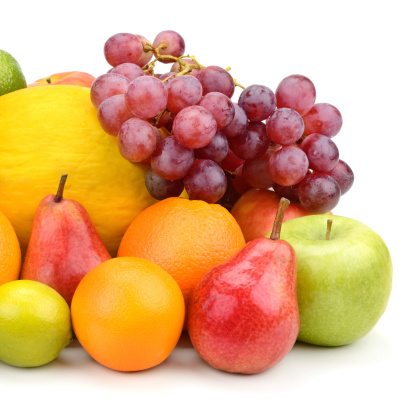
 A life with OAS means only cooked or baked fruit. From this popular archived article, our writer describes how she misses crisp, raw fruit.
Cradling a fresh, succulent peach in my hands, I take in its tantalizing aroma. I rub the fuzz lightly on my lips before taking a big, juice-dripping bite. Delicious.
I swallow, and the tingling begins. First on my tongue, then throughout my mouth and my throat. Tingling becomes itching: there is no stranger feeling than an itchy tongue. That bane of the fruit-loving, Oral Allergy Syndrome, has kicked in.
OAS (also known as pollen-food syndrome) is an allergic reaction to certain proteins in a variety of fruits, vegetables and nuts. The symptoms include itching and burning of the lips, mouth and throat. In more serious reactions, there may be swelling of the mouth, back of the throat and windpipe as well as hives.
Those of us with the condition usually develop symptoms within minutes of eating the food, and they typically dissipate in less than 15 minutes. Just enough time to make a person go a bit crazy.
For me, the itching can be counteracted by eating a neutral substance such as bread or by drinking water. Fortunately, OAS is not often severe.
“For the majority of people, this is not a real life-threatening problem like true food allergies,” explains Dr. Bruce Mazer, director of the division of allergy and immunology at Montreal Children’s Hospital and an associate professor at McGill University.
Raw vs. Cooked Fruit
OAS sufferers react to raw fruit, but are usually able to eat the same food cooked without a problem. “Typically we see OAS in people allergic to heat labile protein, which means those proteins easily destroyed by heat,” explains Dr. Paul Keith, an associate professor of allergy and clinical immunology at McMaster University in Hamilton, Canada.
“When you eat the fruit raw, it’s your own body’s heat that breaks down the protein, which is why the reaction doesn’t move beyond the mouth, says Keith.
I know the raw versus cooked issue first-hand. When I eat uncooked fruits like apples, cherries, pears and my beloved peaches, they all cause itching. But bake them in a pie and I can eat to my heart’s content, without so much as a tingle.
I remember eating apples as a youngster with no problems, but then one day, my tongue got really itchy afterward. As my mother couldn’t see anything on my tongue, she assumed I was trying to get out of eating the fruit. Then it happened again, and with different fruits. Because they couldn’t see a problem, my parents thought I was just fussing. But they did stop giving me the troublesome fruits.
By my late teens, I started trying these fruits again, in small amounts. Sometimes I got an intense itch in my mouth and throat, sometimes it was minor. If I craved the juicy goodness, I’d eat the fruits anyhow – since the itch always went away.
Once, however, I ravenously ate a whole peach. This time itchiness turned to swelling: my lips got puffy and I struggled to swallow. The episode subsided in half an hour. I was miserable, yet vindicated, since my parents finally believed there was an allergic reaction. We asked a couple of doctors, but no one could pinpoint the condition. They advised that I avoid the offending fruits like any major food allergy, and that put an end to my fruit infatuation.
Fortunately, awareness of OAS is growing. But how can you be sure if you have it?
Diagnosing OAS
Since it occurs mainly in people with allergies to birch, grass or ragweed pollen, “the key to diagnosis is the history of hay fever and positive skin tests to relevant pollens,” says Mazer.
“As well, a history of eating the food with typical mouth and throat symptoms without other symptoms, plus the ability to eat the cooked variety of the fruit or vegetable makes the diagnosis fairly certain.”
However – I don’t react to any vegetables sharing allergenic proteins with birch tree pollen, only to fruits. Keith explains that this could be due to a lower level of offending proteins in some of the cross-reacting foods. As well, freshness makes a big difference to the potency.
“The peel also tends to have more protein than the fruit itself,” he says. “So if you peeled an apple and ate it, you might not react as if you ate one with the peel on.”
Like any food allergy, both Mazer and Keith espouse avoidance as the primary means of coping. Mazer also mentions microwaving raw fruit before eating, but agrees the suggestion is not the most appetizing solution. Sprinkling the cut-up fruit with lemon juice and letting it sit for a few minutes may also work.
Given the unpredictability of “true” food allergy, even I have to be on the lookout. “If someone gets hives or worse with the fruit, vegetable or nut; or gets symptoms with both fresh and cooked varieties; or has prolonged symptoms (hours instead of minutes), this may be the sign of a true food allergy,” says Mazer.
In those cases, he emphasizes the importance of seeing an allergist for diagnosis and testing, and then to “strictly avoid the substance and carry self-injectable adrenaline.”
Seeds of Control
If the problem is genuinely OAS, “the key is to manage the hay fever,” Keith says. He suggests using an intranasal steroid two weeks before the season and throughout, to stave off a seasonal rise in the allergic IgE antibodies.
“We want to turn off your nose’s production of IgE locally to the pollen, so when you eat a protein that is very similar, you won’t get the symptoms,” he says. Immunotherapy or allergy shots has not proved particularly helpful for this syndrome, though it can be effective for the hay fever itself.
Some natural therapies may provide some relief. Keith finds that nasal rinsing with a saline spray can be effective in reducing inflammation, while wearing glasses lessens pollen exposure in eyes. He also recommends keeping windows closed, especially in the bedroom and the car, during the specific allergy season.
Given that millions of North Americans suffer from hay fever, the experts actually find it surprising that so few people experience OAS. “A major question is not why people get this problem, but why more people don’t – since the pollen-protein link is always there,” says Mazer. It tends to be those who have more severe hay fever who get OAS.
“If you get OAS symptoms, see your doctor,” says Keith. “What you’re experiencing is really a side effect of your hay fever not being controlled.” So it’s off to the specialist for me to make sense of my hay fever symptoms. There may be a chance yet for my love affair with peaches. One can only hope.
Related Reading:
Oral Allergy Syndrome: Why Raw Fruit Can Make the Mouth Itchy
Oral Allergy Syndrome: Why do Pollens and Foods Cross-React?
Can Fruit & Vegetable Allergies be Related to a Pollen Allergy?