

Teva Pharmaceutical Industries has announced promising early results with a lab-made monoclonal antibody intended to treat celiac disease.
Topline data from a Phase 2a study of the monoclonal antibody TEV ‘408 “showed clinically meaningful prevention of gluten-induced intestinal damage versus placebo,” the company says.
The therapy, given by injection, aims to offer a solution beyond a strict gluten-free diet for adults with celiac disease. That is especially appealing to many patients who experience symptoms and damage to their intestines even while avoiding gluten.
“A strict gluten-free diet has long been the only option for people living with celiac disease,” says Dr. Eric Hughes, Teva’s executive vice president of global R&D. He is also the company’s chief medical officer.
Teva announced in September 2026 that the continuing Phase 2a clinical trial of the TEV ‘408 met its primary endpoint. The conclusion was based on biopsy assessments and patient symptoms after eight weeks in the placebo-controlled study.
Teva’s monoclonal antibody is designed to block the activity of interleukin-15 (IL-15), a cytokine or signaling molecule. In someone with celiac disease, IL-15 sets off an inflammatory and damaging immune response to gluten in the gut.
While still in its early stages of clinical study, Teva is encouraged by TEV ‘408’s potential.
“These results underscore the potential to move beyond managing gluten exposure and address celiac disease at its biological source,” Hughes says. The company plans to release further analysis of the study data at a future scientific meeting.
Teva Antibody’s Study Data
Teva’s Phase 2a trial enrolled 50 adults with celiac disease, who were following a gluten-free diet. At the start, participants either received one dose of TEV ‘408 by injection or a placebo. After two weeks, they ate the equivalent of a standard slice of bread (3 grams of gluten) each day for six weeks.
Following that six-week gluten challenge, participants were given biopsies to measure intestinal damage and inflammation.
When a person with celiac disease consumes gluten, the villi, small, hairlike projections that line the small intestine, become damaged. This impedes the absorption of essential nutrients. The IL-15 protein, which Teva’s monoclonal antibody targets, signals that attack on the small intestine.
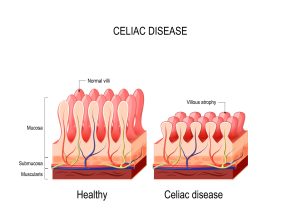
Researchers in the TEV ‘408 trial measured the length of villi as part of their evaluation of study participants’ biopsies. They concluded that the difference between their findings in the treatment and placebo samples showed the drug was effective in reducing damage to the intestines.
At the study’s eight-week mark, researchers also analyzed patient-reported symptoms, such as abdominal pain, bloating, diarrhea, nausea, and fatigue.
Patients recorded symptoms in the standardized Celiac Disease Symptom Diary (CDSD). Symptom severity is rated on a scale of 0 (none) to 4 (very severe). Teva reports that patients who received the TEV ‘408 dose gave a lower score for gastrointestinal symptoms than those on the placebo. The company says the investigational drug was well-tolerated.
The Phase 2a study results, “strengthen our confidence in targeting the IL-15 pathway as an approach to reducing immune-driven intestinal damage,” Hughes says.
Next Steps for IL-15 Blocker
The advocacy group Beyond Celiac is awaiting the publication of full results to review the data, says Dr. Debra Silberg. However, the nonprofit’s chief scientific officer says the success of Teva’s potential treatment in studies so far is encouraging.

“We would consider any drug that reduces both intestinal damage and symptoms to be beneficial for the celiac disease community,” Silberg says.
Teva plans to present its data from the Phase 2a study to the U.S. Food and Drug Administration. Those discussions with regulators will guide the design and timing for the next Phase 2 and Phase 3 clinical trials, Hughes says.
Studies will likely involve lower amounts of gluten exposure, long-term safety assessment, and will define the drug’s dose and regimen, Teva states. The treatment is currently designed for quarterly injections.
TEV ‘408 received a fast-track designation in 2025 from the FDA. The company is also banking on its financial agreement with Royalty Pharma to accelerate the drug’s clinical development. The funding deal could bring Teva’s up to $500 million to support this research.
Teva is certainly not alone in its effort to develop the first therapy for celiac disease. Silberg is encouraged by the interest from pharmaceutical and biotech companies in finding a treatment.
“There are therapeutics targeting different mechanisms in clinical development. So that if one fails, hopefully another will succeed,” she says. Most of the celiac research is in its early stages.
Celiac Therapy Pipeline
Beyond Celiac provides information about the current research, along with a primer on clinical trials, on its drug development pipeline page. The Celiac Disease Foundation also provides a rundown of current clinical studies and how to participate on its website.
A couple of the other lab-made antibodies under study include:
- DONQ52: Chugai Pharmaceuticals has developed a monoclonal antibody designed to stop the immune system’s reaction to gluten that causes intestinal damage. The drug is being tested Phase 2 clinical trial called the Daisy Study. This antibody candidate targets gluten peptides, to prevent them from activating the immune system in celiac disease.
- Amlitelimab: Sanofi is studying this monoclonal antibody, which blocks OX40-Ligand, an immune regulator. A Phase 2a/b clinical trial is underway in adults with non-responsive celiac disease. The study will assess the treatment’s effectiveness in reducing changes in the intestine caused by gluten.
Scientists continue the important work on the development of various potential treatments for celiac disease. Beyond Celiac hopes for a therapy that helps people with celiac disease live well without facing intestinal damage or symptoms from gluten exposure.
“In the future, it would be wonderful if a gluten-free diet is only one of the treatments available for celiac disease,” Silberg says. “Our goal is to allow people with celiac disease to live full, healthy lives, without fear.”
Related Reading:
With 3 Federal Bills in Play, Hopes are High for Full Gluten Labeling
‘What Am I Doing Wrong?’ When Celiac Symptoms Persist