Anaphylaxis at 35,000 feet is one of the most feared scenarios for people living with food allergies. Immediate hospital care is not available. In the case of a life-threatening reaction, surviving the crisis may well depend on the preparation of the passenger, the airline and its crew.
That reality came into sharp focus for me following recent media coverage of a Virgin Australia medical emergency. Passenger Andrew Rawle experienced in-flight anaphylaxis on a regional flight from Perth to Newman, Western Australia. A glance at a map shows just how isolated that route is, far from major population centers and advanced medical facilities.
It is not clear what triggered Rawle’s severe allergic reaction. According to an interview with the Australian Broadcasting Corporation (ABC), he said he’d accepted a plate of cheese and crackers offered as an in-flight snack. He also speculated that surface contamination from those previously in his seat may have played a role.
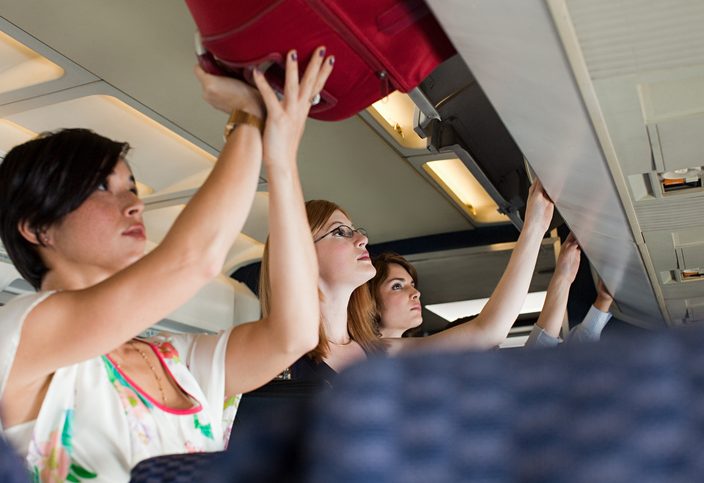
Shortly after consuming the snack, Rawle felt his throat beginning to close. Recognizing the symptoms of anaphylaxis, he retrieved his one EpiPen from the overhead bin, and alerted cabin crew.
Following his injection, he told ABC that the reaction initially subsided. Yet, about 20 minutes later, his throat began closing again. When no medical professional responded to the crew’s announcement requesting assistance, a fellow passenger stepped forward to offer her own epinephrine auto-injector.
The airline crew also contacted emergency medical services so they would meet the aircraft upon landing.
It is critical to note that when Mr. Rawle experienced a severe secondary reaction mid-flight, there was no airline-supplied epinephrine available onboard. During what he calls the worst reaction of his life, the chance presence of another passenger who had epinephrine saved his life.
Virgin’s Flight: Lacked Medical Kit and Epi
As Allergic Living’s Airlines correspondent, I wanted to understand how this could happen on Virgin Australia. This is an airline known for its allergy awareness, crew training, and the inclusion of epinephrine in emergency medical kits. Why was a fellow passenger’s medication needed? Why was epinephrine not available onboard?
Virgin Australia’s spokesperson told me that its cabin crew are trained in the management of anaphylaxis as part of their aviation medicine training, which can include administering epinephrine when appropriate. In this instance, the airline said their crew supported the passenger in self-administering his epinephrine auto-injector. They also provided oxygen and made an onboard announcement requesting medical assistance.
Virgin Australia also confirmed a critical detail. While the majority of its aircraft carry emergency medical kits (EMKs) that include adrenaline auto-injectors, “there was not an EMK available on this particular flight”. The airline says all Boeing 737 aircraft, the mainstay of its fleet, are equipped with these kits.
The remainder of the fleet, Virgin Australia said, is scheduled to be equipped with emergency medical kits containing auto-injectors during February 2026.
Virgin Australia emphasized that passengers with life-threatening allergies must carry their own medication, keep it within reach, and be able to administer it if needed. The airline recommends that passengers with anaphylaxis risk submit a Medical Clearance Request Form prior to flying. The spokesperson said this step allows a crew to better support individual passenger needs. Virgin Australia says that Rawle did not submit a medical clearance form prior to this flight.
Medical clearance forms can help airlines prepare accommodations. However, their absence does not alter the fact that first-time reactions and secondary anaphylaxis can occur on flights without warning. The nonprofit Allergy & Anaphylaxis Australia says it is “currently working with Virgin Australia to increase flight safety of people with food allergy”.
Importance of Epi in the Skies
The airline rightly notes that both the assisting passenger and the flight crew are to be commended for swift actions in Rawle’s life-threatening situation.
Yet, for people living with food allergies, this Australian emergency underscores a critical reality. Even on airlines with strong allergy policies and trained staff, exceptional circumstances exist. Not all aircraft are equipped the same way. Not every route has the same level of onboard medical resources and a medical professional won’t be on every flight.
When we talk about the rising prevalence of food allergies, each statistic represents a potential passenger on an airplane. Airlines continue to serve common trigger foods, while adult-onset allergies are increasing. So a person can eat a food safely for decades and suddenly become allergic. This can become an issue when that person is flying at 35,000 feet, distant from hospital care.
First-time reactions in children can also occur without warning. Another issue is that those with a known food allergy may not always have their medication on them. Or, as in Rawle’s case, they may need backup epinephrine. The arguments for always having an EMK that contains an easy-to-use epinephrine device grow ever stronger.
Passengers, of course, must come prepared, too. Andrew Rawle told ABC that the next time, he plans to travel with gloves, masks – and multiple epinephrine auto-injectors. That may sound extreme. But for those who live with severe allergies, his story illustrates why being “extra prepared” is not optional.
‘Borrowed’ Epinephrine: Not a Solution
Allergic Living has reported on several instances in which borrowed epinephrine has been used during in-flight allergic emergencies. Time and again, a good outcome has depended, not on airline-supplied medication, but on the chance presence of another passenger carrying the lifesaving drug.
The troubling reality is that relying on another passenger’s epinephrine is not a safety strategy, and it is not acceptable.
Borrowing someone else’s lifesaving medication puts two lives at risk – the person experiencing in-flight anaphylaxis and passenger who volunteers their medication. The latter is left without protection themselves, particularly when traveling to destinations where refills may be difficult or impossible to obtain.
Epinephrine’s availability should never depend on luck or another passenger. In a cabin where advanced medical care is limited, consistent access to epinephrine is not optional. It’s essential.
This is precisely why Allergic Living developed its airline-by-airline guide detailing food allergy policies, accommodations, and onboard medical resources. (Virgin Australia will soon be added to that guide.)
The Virgin Australia in-flight anaphylaxis emergency is an illustrative case. It helps us to understand anaphylaxis risk and making informed choices in an environment where minutes can determine outcomes. We have the knowledge, the medication, and the opportunity to act now, before a preventable tragedy occurs.
Lianne Mandelbaum is Allergic Living’s airlines correspondent, and the founder of the nonprofit NoNutTraveler.com.
Related Reading:
Allergic Living’s Airlines & Allergies Guide: Domestic
Allergic Living’s Airlines & Allergies Guide: International
It’s Come to This: ‘Borrowing’ Epinephrine on Planes