

A new federal law requires school food service personnel to receive annual training about food allergies. The Protecting Children with Food Allergies Act aims to better prepare school staff to prevent and respond to food allergy reactions.
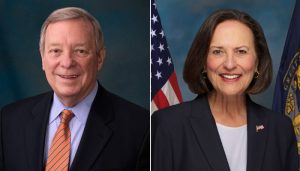
U.S. Senator Dick Durbin, who introduced the act with U.S. Senator Deb Fischer, says the law, “will ensure that kids will be safer in the event of an allergic reaction.”
President Donald Trump signed the bipartisan legislation January 14, 2026, through an amendment to the Whole Milk for Healthy Kids Act.
“When parents drop their kids off at school, they should have peace of mind knowing that their children are safe with personnel who are trained to handle their children’s food allergies,” Durbin said.
The legislation acknowledges that responsibility for student safety extends beyond the classroom to cafeterias and any environment where food is prepared and served, Dr. Aikaterini Anagnostou tells Allergic Living. The Houston-based allergist is chair of the American College of Allergy, Asthma and Immunology’s (ACAAI) food allergy committee.
“The signing of this act into law represents a significant and thoughtful advancement in safeguarding the health and well-being of students with food allergies,” Anagnostou says. “School food service staff play a critical role on the front lines of student health each day.”
The Law on Allergy Training
School food service staff who work under the USDA’s National School Lunch Program and the School Breakfast Program currently must complete yearly training about nutrition, health and food safety standards.
Now, under the Protecting Children with Food Allergies law, the USDA will require food allergy training as well. Training modules will include, “best practices to prevent, recognize and respond to food-related allergic reactions,” the law states.
The federally assisted meal programs operate in almost all public and nonprofit schools. Among U.S. private schools, 15 percent offer the lunch program and 10 percent offer the breakfast program.
The ACAAI applauds the law for ensuring that school staff can identify common allergens, implement evidence-based food safety practices, and respond appropriately to allergic reactions, Anagnostou says.
“Most importantly, such training fosters a safer, more inclusive school environment in which students with food allergies can access meals with confidence,” she says.
Making Schools Safer Nationwide
Food allergy training has long been viewed as key to helping protect students while they are at school.
In fact, school personnel training is an essential component of recommendations that FARE released in November 2024. The Food Allergy Management in Schools (FAMS) report includes guidance to enhance the Centers for Disease Control and Prevention voluntary guidelines for managing allergies at school.
Those recommendations aim to help ensure a safe environment for students with food allergies. With about two students per classroom having food allergies, the prevalence of food allergies fuels the need for prepared school personnel.
Durbin and Fischer point to the number of students with food allergies as a public health concern that underscores the need for training.
Their announcement about the Protecting Children with Food Allergies law also notes that 20 percent of epinephrine administrations in schools are for children with undiagnosed food allergies. That “makes it even more important for school food personnel to understand how to recognize and respond to an allergic reaction,” the announcement says.
The food allergy nonprofit FARE has supported the law since it was introduced in April 2025. The organization lauded the legislative efforts to ensure food-allergic students are better protected through staff training.
“By ensuring school food service staff receive training on food allergy safety, you’ve helped make schools safer for millions of children nationwide,” FARE CEO Sung Poblete, PhD, RN, said in a statement.
In addition to FARE and the ACAAI, the Asthma and Allergy Foundation of America, the American Academy of Allergy Asthma & Immunology, the American Academy of Pediatrics, and the School Nutrition Association endorsed the new legislation.
Related Reading:
New Food Allergy Guidance for Schools Hailed as ‘Actionable’
California’s ADDE Allergy Dining Act Becomes Law