

Momentum continues to build in efforts to make California the first state to require restaurants to list top allergens on their menus under the proposed ADDE Act. Advocates are urging supporters to reach out to their representatives to support SB 68.
The bill, known as the Allergen Disclosure for Dining Experiences (ADDE) Act, would require the state’s restaurants to provide written notification of menu ingredients.
Addie Lao, 9, who has multiple food allergies, is the inspiration for the proposed legislation. She and her mom Robyn Lao worked with Senator Caroline Menjivar to co-author the bill. Menjivar also has severe food allergies.
The Asthma and Allergy Foundation of America (AAFA) has been a staunch advocate for the ADDE Act. The nonprofit has been lobbying for the legislation, and organizing efforts to ensure supporters’ voices are heard.
“We are excited about the momentum building around this bill to provide allergen disclosure on restaurant menus,” says Jenna Riemenschneider, vice president of Advocacy and Policy at AAFA.
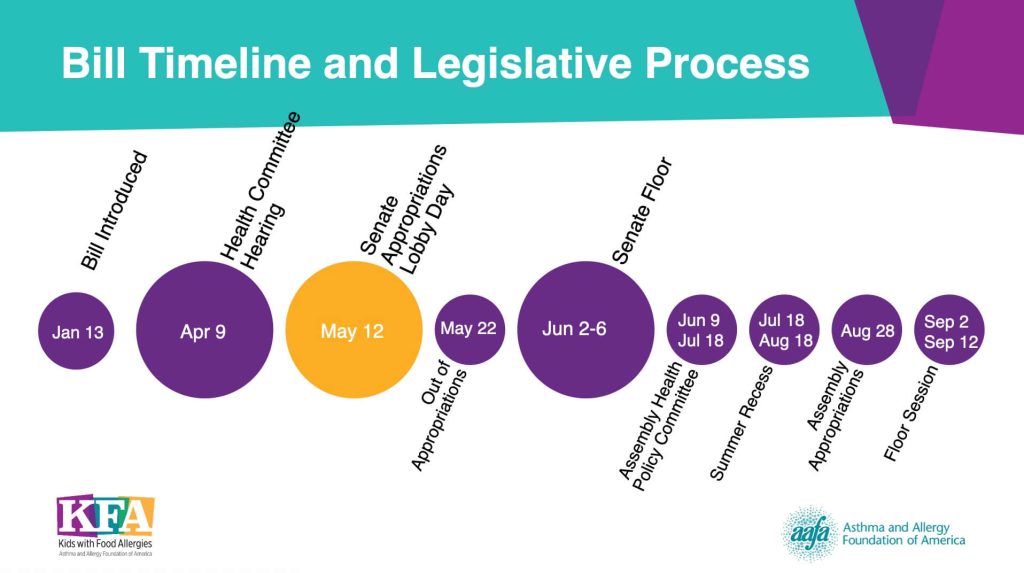
That momentum was crucial as lawmakers reviewed the proposed legislation during a hearing to decide whether to move it to the Senate floor. The Senate Appropriations Committee made its decision to move the bill forward on May 23.
Helping ADDE Lobby Effort
Personal stories can be powerful advocacy tools to garner support for food allergy bills.
Menjivar, who introduced the menu bill in January 2025, has suffered severe allergic reactions after eating restaurant meals that turned out to contain allergens. Addie shares her story to help sway lawmakers about the need to make dining out safer for food-allergic diners like her.
Addie and her third-grade classmates even helped to move the ADDE Act out of the Senate Health Committee when they testified during an April 9 hearing.
California residents shared their reasons for backing the ADDE Act by participating in-person or via Zoom during a May 12 lobby day in Sacramento. The Addie Tells All website also includes steps on how to help.
The Senate Appropriations Committee has placed the ADDE Act in its “Suspense File,” a designation that means the bill is likely to cost more than $50,000. With that committee moving the allergen transparency bill forward, the full Senate will now consider it in early June.
If the bill is passed, the law would take effect in July 2026. It also adds sesame to the list of major food allergens in the California Health and Safety Code.
Opposition to ADDE Bill
The bill is not without opposition. FARE hosted a town hall on April 16, during which FARE CEO Sung Poblete PhD, RN, explained the food allergy nonprofit’s concerns about it. These include lack of consultation with the restaurant industry, the timeline, and no references to digital menu labeling. She has called for an amendment to the bill.
In April, FARE joined with the California Restaurant Association (CRA) to announce their opposition to the ADDE Act in a joint letter.
“The CRA remains opposed to the one-size-fits-all method that SB 68 would require restaurants to use,” CRA president and CEO Jot Condie told Allergic Living.
Protecting food-allergic diners “is of the utmost importance to neighborhood restaurants,” he says. But the association does not think the ADDE Act is the best way to achieve that.
“SB 68 still does not take into account the realities of running a kitchen in this economy with ever-changing ingredients and sourcing,” Condie says.
Power of Voices
AAFA recently hosted a webinar about the bill, in which panelists shared advice based on their own lobbying experience.
“As we advocate for the ADDE Act, never underestimate the power of your local voice,” Thomas Silvera of the Elijah-Alavi Foundation told webinar listeners.
Silvera is no stranger to the legislative process in California. He worked tirelessly until Elijah’s Law – introducing allergy protocols in childcare – was signed in that state in 2024. In April 2025, Arkansas became the sixth state to enact such a law.
“Grassroots advocacy … can build an unstoppable momentum,” he says.
With the efforts of advocates of all ages, the ADDE Act has been gaining traction throughout the legislative process. “There are many steps in the process, and we are encouraged that as more people learn about the ADDE Act, support increases,” Riemenschneider says.
Allergic Living, which supports allergen transparency in dining, is among 35 organizations and more than 500 medical professionals that signed a letter of support for the bill. Other supporters include the American College of Allergy, Asthma and Immunology, the Food Allergy & Anaphylaxis Connection Team (FAACT), the Food Allergy Nursing Association, and the American Academy of Pediatrics, California.
Related Reading:
ADDE Act for Menu Labeling Gets Boost at Hearing
Texas Student’s Death Shows Need for Menu Ingredients