

A proposed bill in California would require the state’s restaurants to list top food allergens contained in items on their menus. If successful, the ADDE Act would be the first state law to mandate written notification of menu ingredients.
Advocates are urging supporters to make their voices heard on this bill in letters or at a state Senate Health Committee hearing on April 9, 2025. Senator Caroline Menjivar introduced SB 68, known as the Allergen Disclosure for Dining Experiences (ADDE) Act, into the California Senate in January 2025.
Menjivar, chair of the Senate Health Committee, wants to protect Californians like her, who have severe food allergies. Menjivar says she has suffered multiple severe allergic reactions after eating meals at restaurants that turned out to contain undisclosed allergens.
“I am doing this for the kids currently navigating life with these allergies in hopes they never have to go through what I went through,” Menjivar tells Allergic Living.
One of those California kids, 9-year-old Addie Lao, is the inspiration for the bill. Addie and her mom Robyn Lao worked with Menjivar to co-author the legislation. Addie is allergic to dairy, peanuts, tree nuts and sesame; while Menjivar is allergic to nuts and most fruits.
“I wanted to introduce this bill because it’s really hard for me to eat at restaurants safely,” Addie says. Sometimes she skips restaurant meals when servers offer unsatisfactory allergen information and it feels too risky.
“If they are wrong, I won’t just get a rash, I could die,” she says. Having clear, written information about allergens in menu items would make dining out safer.
“With good labeling, restaurant staff and patrons will be much better informed to have conversations about their meals and make informed choices,” Robyn Lao says.
How to Support the ADDE Act
If it passes, the ADDE Act would take effect in July 2026. The Laos have been garnering support for it, including having Addie share her story. They are urging others to help educate lawmakers about the need for the bill.
“From every food allergy parent, the general sentiment has been, ‘we need this,’” Lao says.
The Asthma and Allergy Foundation of America (AAFA) has thrown its weight behind the initiative, working to move the bill forward in Sacramento. “It is imperative to take steps to make eating in restaurants safer for the food allergy community,” Kenneth Mendez, AAFA’s president and CEO.
Members of the food allergy community can share their stories before the crucial Senate hearing on April 9. AAFA created an “Action Alert” page on how to help, whether writing a support letter, attending the hearing or speaking at an event.
“No U.S. state has passed a comprehensive law to protect people with food allergies in restaurants. It’s time for California to take action and set the standard,” Mendez tells Allergic Living.
The Laos also include steps that community members can take on the Addie Tells All website.
Mendez points to the high number of state residents the ADDE Act would benefit. In California, 7.5 million either live with a food allergy or have a family member with a food allergy, he says. According to a CDC study, he reminds, nearly half of fatal food allergy-related reactions were caused by restaurant food.
Addie’s Taste of Safe Dining
Addie, whose favorite foods are French fries, dumplings and noodles, has glimpsed what dining out could be like if the ADDE Act passes.
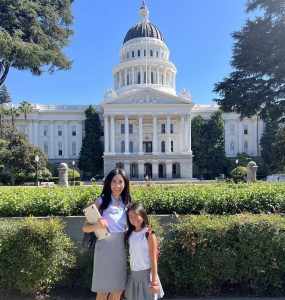
She and her family celebrated Mother’s Day of 2024 at a restaurant that labels for the top nine allergens. The server also showed her the ingredients list when she ordered. The outing inspired her family to seek legislation that would make the successful experience possible at any restaurant.
“I had the tastiest dumplings for the first time at a restaurant!” recalls Addie. “I felt safe, and I had the best time enjoying a meal with my family.”
Many times Addie must rely on the food her mom preps and packs. While she feels safe having backup food when dining out, getting by on snacks isn’t the same.
“It’s really sad to see my family enjoying restaurant food, while I can’t join in,” she says. The family often avoids going out to restaurants, so Addie doesn’t feel left out.
“Without good information, restaurants are just minefields,” Lao says.
ADDE Act ‘Personal’ for Senator
Since she was a child, Menjivar says, “I’ve experienced severe reactions to my allergies. There were symptoms I vividly remember but wish I could forget because of how scared I was each time.”
The lawmaker recalls her mother frantically driving her to the hospital when she suffered a severe reaction after eating pesto pasta at a restaurant. She didn’t know, nor did restaurant staff inform her, that pesto is made with pine nuts. Another time, Menjivar wound up in a hospital after ordering the creamy drink horchata at a restaurant. There was no warning it was made with almond milk.
As someone who has carried epinephrine “for most of my life, this is very personal to me,” Menjivar says of the ADDE Act.
Lao agrees the legislation would be life-changing for her family. As well, as a pediatric nurse practitioner, Lao views the food allergy bill as a critical policy to help prevent tragedies.
“This bill will bring forth a culture of food allergy safety in restaurants to save lives,” she says.
Related Reading:
Why All the Food Allergy Tragedies: What Has Got to Change
Texas Student’s Allergy Tragedy Shows Need for Menu Ingredients